What Makes Gift Shop Marketing Different
A grocer sells to the same household every week. A gift shop sells to the same household perhaps six or seven times a year, each time for a different person and a different reason, and each time the shopper is choosing on somebody else's behalf rather than their own. That changes the emotional stakes considerably. A poorly chosen present reflects on the giver, so a shopper wants reassurance as much as they want choice, and a shop that makes the decision feel safe earns a disproportionate amount of trust for a relatively small sale.
It also changes the strategy. A gift shop cannot be everything to everyone and still be memorable to anyone. The shops that do well tend to pick a clear identity, the place for quirky adult humour gifts, the place for thoughtfully made local craft, the place for the baby shower and the christening, and serve that identity properly rather than stocking a little of everything and standing for none of it. A narrower, sharper identity is easier to recommend by name, and recommendation is most of how a gift shop fills its till. The shop that tries to be the shop for every occasion ends up being the shop nobody specifically thinks of for any of them.

How Do Gift Shops Attract Customers?
Gift shops attract customers through a handful of levers working together rather than any single trick. A complete, accurate listing on Google and other local platforms, so the shop shows up when someone searches nearby. Genuine reviews that answer the unspoken question of whether this is a safe place to choose a present. Stock and window displays distinctive enough that a customer mentions them to someone else without being asked. A visible presence around the specific occasions people search for, birthdays, anniversaries, Mother's Day, Christmas, rather than silence between them. A social media feed that keeps the shop in view on the ordinary weeks when nobody has an occasion coming up. And local partnerships that put the shop in front of people who were not already looking for it.
None of these levers does much on its own. A beautiful window with no reviews behind it still feels like a risk to a nervous shopper, and a shop full of five-star reviews that nobody can find online never gets the chance to earn them. Pulled together, they build the thing that drives repeat footfall into a gift shop: being the name that comes to mind first when the occasion lands.

Why Footfall Alone Will Not Carry a Gift Shop Through the Year
It is worth being honest about the trading conditions before getting into tactics, because they shape which of those levers matter most. Total UK footfall in 2025 was down 0.8 percent compared with 2024, and shoppers were browsing less in the run-up to Christmas, making fewer but more targeted shopping trips, with shopping centres seeing the steepest drop in footfall. A gift shop that depends on passers-by wandering in is depending on a pool of casual browsing that is shrinking year on year.
The spending has not disappeared. Non-food store sales, the category gift shops sit inside, rose by 1.2 percent in the most recent Office for National Statistics figures, so money is still moving through shops like these. But the same data also shows how quickly that spending can turn, with clothing, footwear and sports equipment stores falling in September 2026, which retailers attributed to lower footfall and customers cutting back. Gift shops sit in that same discretionary bracket. The shopper who was going to come in anyway is a smaller group than it used to be, which makes it far more important to be the shop that gets actively chosen than the shop that hopes to be passed. Our broader guide to retail marketing covers how independent shops are adapting to that shift across categories.

Build Recognition Before the Occasion Arrives
Because almost every gift purchase is prompted by an event rather than a want, the shop that wins is usually the one already sitting in the shopper's head before the search begins. Christmas is the clearest example of this. One in three UK consumers, 30 percent, plan to spend more this Christmas than last, so the budget is often there. What is working against the shop is time and nerves rather than money, since a third of consumers, 33 percent, find Christmas shopping stressful. A stressed shopper does not go hunting for new options. They go to the first name they already trust.
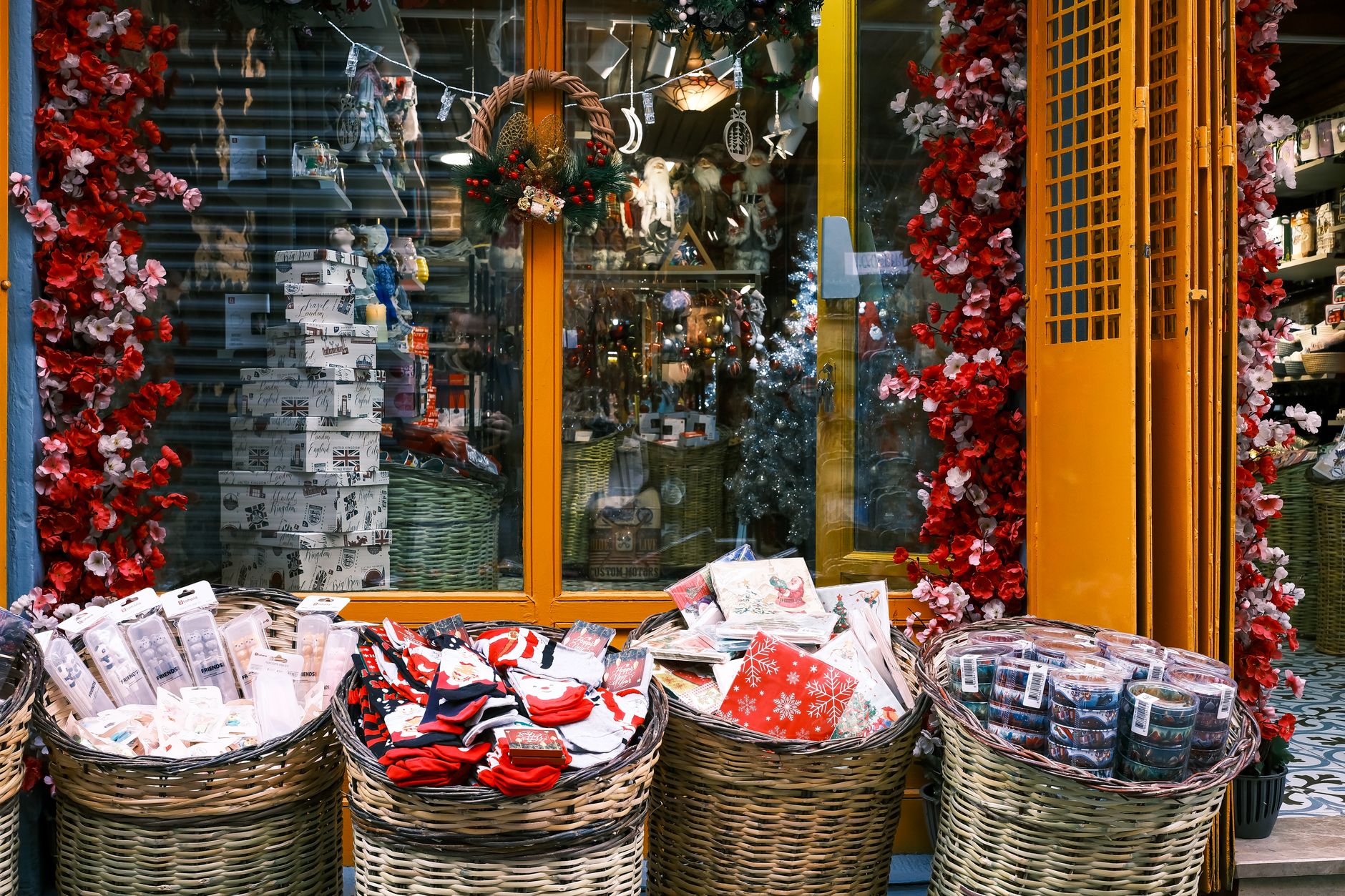
That means a gift shop should be building presence around its busiest occasions long before the occasion itself. A note in the local paper or community group in October about Christmas opening hours and gift wrapping. A post in September reminding parents that school fete and leaving presents are coming up. A window that changes with each season so the shop stays visibly relevant rather than static. None of it needs a large budget. It needs the discipline of showing up for an occasion before the shopper starts looking, so the shop is already the answer rather than one of several options being compared in a hurry.
Make Your Shop and Your Stock Worth Talking About
Word of mouth does more for a gift shop than almost any paid activity, because a recommended gift shop arrives pre-approved by someone the buyer already trusts. That word of mouth rarely happens by accident. It happens because something about the shop or the stock gave the customer a reason to mention it, a maker's story behind a product, a display worth photographing, a wrapping touch nobody else offers.
This is exactly the shift independent gift retailers are being pushed towards by their own trade. Reporting from the UK's major autumn gift trade show found that independent retailers are looking for products that give customers a genuine reason to visit the shop, while brands are being challenged to communicate what makes them distinctive, whether that is their story, provenance, design, sustainability or the people behind the business. A shop that can say where a candle is made, who makes it and why, gives a customer something they can repeat to the person they are buying for, and a story repeated is marketing that costs nothing. The same principle that builds a brand strategy for any small business applies here directly: pick the handful of things you want to be known for and make sure every piece of stock and every display reinforces them, rather than stocking anything that might sell.

Win the Moments Customers Search and Decide
A shopper who has never visited a gift shop before makes their first judgement online, usually before they decide whether the trip is worth making. That first judgement increasingly happens on a business's Google listing, yet a large share of small businesses are leaving that moment unattended. Recent research found that only 35 percent of small and medium businesses have a Google Business Profile, leaving many potential customers unable to read or write a review before they visit. For a gift shop depending on nervous, time-pressed shoppers, that is a sizeable gap to leave open.
Reviews themselves carry weight beyond simply existing. The 2026 Local Consumer Review Survey found that 89 percent of consumers expect a business owner to respond to reviews, and 42 percent say they are unlikely to use a business that ignores them. The same research found that businesses which ask for reviews see considerably stronger results than those that do not, with 57 percent of businesses that ask for reviews holding between 11 and 50 Google reviews, against 50 percent of those that don't ask. A gift shop owner who makes asking for a review part of every satisfying sale, and who takes five minutes to reply to each one, is doing more for the next nervous shopper's confidence than almost any other single action available.

Use Social Media to Stay Front of Mind Between Occasions
Most weeks, nobody in your area has a gift emergency. Social media is how a gift shop stays visible on those quiet weeks, so it is already familiar by the time an occasion appears. Social platforms remain the place where most UK adults can be reached, with 89 percent of adult internet users on at least one platform, rising to 97 percent among 16 to 34 year olds, which covers both the gift buyer picking a present for a parent and the one picking a present for a friend their own age.
The content that earns attention here is the same content that earns word of mouth in the shop itself, a new delivery unwrapped on camera, a customer's thank you shared with permission, the story behind a product rather than a bare price tag. Posting consistently in a recognisable voice does more over a year than one clever viral attempt, because the goal is not a single moment of attention but a steady, repeated presence that a scrolling customer recognises instantly when the occasion arrives. That is a habit rather than a campaign, and it is the habit that keeps a gift shop in a customer's head for the eleven months a year they are not actively shopping for a present.

Partner Locally and Ride the Shopping Calendar
A gift shop rarely needs to find new customers alone. Local partnerships do more for a campaign like Small Business Saturday than any single business acting on its own, because a shared push with neighbouring independents, a cafe offering a discount to anyone with a bag from the shop next door, a joint window trail through the town, reaches people who were not already looking for a gift shop that day. The campaign itself has national reach behind it. Small Business Saturday's latest festive advert called on the public to support the UK's 5.7 million small businesses ahead of the day itself, which gives a gift shop a ready-made moment to plug into rather than inventing its own promotion from nothing.
The same thinking applies to the rest of the shopping calendar. A gift shop that coordinates with the other independents on its street, around Small Business Saturday, around a Christmas lights switch-on, around a summer fete, borrows attention it would otherwise have to buy. Our guide for high street operators goes further into how independent shops on the same parade can work together rather than compete for the same passing trade.