How Do Garden Centres Attract Customers?
A garden centre attracts customers through three things working together: showing up before the need arises, giving people a reason to stay once they are through the door, and making the visit easy to find and easy to repeat. Someone does not wake up wanting a garden centre. They wake up wanting a tidy border, a birthday gift, or somewhere to take the children on a wet Sunday, and the centre that comes to mind first, is easiest to get to, and has something worth staying for tends to win that trip. That means the marketing job splits into two halves that have to run at the same time. One half is seasonal and local, getting the right message in front of the right people as spring bedding, autumn planting or Christmas gifting comes round. The other half is about the site itself, the café, the events, the layout, because a centre that is only good for buying compost gets one visit a year, and a centre that is good for a morning out gets a dozen.
Why the Garden Centre Calendar Drives Everything
Garden centre trading does not move in a straight line across the year. It moves in waves tied to the weather, the school calendar and the gardening season, and a marketing plan that ignores that rhythm is always pushing against the tide rather than with it. The clearest evidence of this comes from the trade body itself. More than 200 garden centres across the UK belong to the Garden Centre Association, and its members feed into a monthly Barometer of Trade that tracks how the sector is performing, month by month, rather than how owners assume it is performing.
Early in the year the pattern is unmistakable. Garden centre sales rose 4% year on year in February 2026, which the Horticultural Trades Association said helped deliver a strong start to the year. Sales across January and February that year ran 5% ahead of 2025 and 6% ahead of 2024, according to the same report, which tells you the spring rush is not a one-off, it is a repeatable window a centre can plan its marketing around every single year. Later in the year the categories flip rather than fade. GCA members recorded an overall sales increase of +7.05% in September 2026 compared with the same month the year before, as gardening categories returned to leading the growth, according to the Garden Centre Association's latest Barometer of Trade. A marketing calendar that treats spring and autumn the same way, or worse, goes quiet between them, is leaving a predictable seasonal pattern unused.

Make the Day Out the Product
The single biggest difference between a garden centre and most other retail is that people do not come for one thing, they come for an afternoon. That changes what the marketing should sell. It is not only the plants, it is the whole visit. The sector's own numbers back this up plainly. Catering now represents 36% of total garden centre sales, a figure the GCA's chief executive, Peter Burks, has pointed to as proof of how important the café is to pulling visitors in at this time of year. When over a third of what a centre earns comes from people sitting down for a coffee and a scone rather than buying a shrub, the café stops being an add-on and becomes one of the main reasons anyone turns up at all.
This is the same lesson that sits at the heart of Seth Godin's writing on serving a market extraordinarily well rather than chasing everyone. A garden centre's smallest viable market is not "people who garden", it is "people in this town who want somewhere pleasant to spend a Saturday morning", and the plants, the café, the play area and the gift aisle all serve that single purpose. The same principle applies well beyond garden centres, and our guide to marketing for retail businesses walks through how any independent shop can build a visit worth repeating rather than a transaction worth forgetting.

Build Mental Availability Before the Rush
Marketing science has a blunt way of putting this. Brands grow by being the one that springs to mind at the exact moment someone has the need, and by being easy to find and easy to buy from once they do. For a garden centre that means two separate jobs, and most owners only do one of them. The first is being present in someone's head before the need arrives, through consistent local visibility, a Google Business Profile kept current, a social feed that shows up in the weeks before a bank holiday rather than during it, and signage that is easy to spot from the road. The second is being genuinely easy to buy from once someone has decided, with clear parking, well-stocked shelves for what the season demands, and staff who can answer a question without a search.
Neither of these is about running one clever campaign. It is about turning up consistently, with the same name, the same tone and the same look, so that when the first frost hits or the Easter half term rolls round, your centre is the one a local family already half-remembers. A written marketing strategy is what keeps that consistency from slipping back into whatever feels urgent that week, which is exactly how a lot of seasonal businesses end up marketing reactively instead of on purpose.

Why a Loyalty Card Alone Won't Grow Your Centre
Most garden centres eventually ask whether a loyalty card or a points scheme is worth building, and it is worth being honest about what that kind of scheme does. Loyalty schemes are already everywhere a shopper looks. A 2024 review of grocery loyalty pricing by the Competition and Markets Authority found that 97% of UK shoppers were already members of at least one loyalty scheme, with the average shopper carrying three memberships at once. Roughly 83% of UK households now carry a Tesco Clubcard, as reported by The Grocer, and the same report notes that even the Co-op is chasing 10 million active members by the end of the decade. A garden centre launching its own card is not introducing something new to a shopper's wallet. It is competing for attention inside a space that is already crowded with three or more other cards doing the same job, better funded and already habitual.
This matches what the marketing science on brand growth has found for years. Loyalty programmes and promotional discounts rarely drive new, profitable growth on their own, mostly because they reward people who were already going to buy and simply shift the timing of a purchase that would have happened anyway. A points card can be a pleasant extra for your regulars. It is not the lever that brings new visitors through the gate for the first time. The lever that does that is the combination covered above, being visible and easy to choose at the moment the need arises, which is a cheaper and more durable use of a small team's time than building and running a card scheme from scratch.

Turn First-Time Visitors Into Regulars
Getting someone through the gate once is the easier half of the job. The harder half is giving them a reason to come back before the next season even starts. This is where the unglamorous basics matter more than any campaign. Keep the Google Business Profile accurate, with current opening hours, fresh photos of the site and a steady flow of recent reviews, because that is the listing most people check before they decide to drive out. Run a small, reliable events calendar, a half-term trail for children, a seasonal workshop, a weekend demonstration, so there is always a near-term reason to return rather than a vague promise to "pop back sometime". Ask every happy customer for a review on the day they leave, not weeks later, because recent and specific reviews do more to persuade the next visitor than a pile of old five-star ratings ever will.
Footfall itself is worth treating as a number you actively manage rather than something that happens to you. Our guide to how to increase footfall sets out the specific local tactics, from signage and local search to events and partnerships, that apply directly to a site people have to physically drive to, which a garden centre always is.
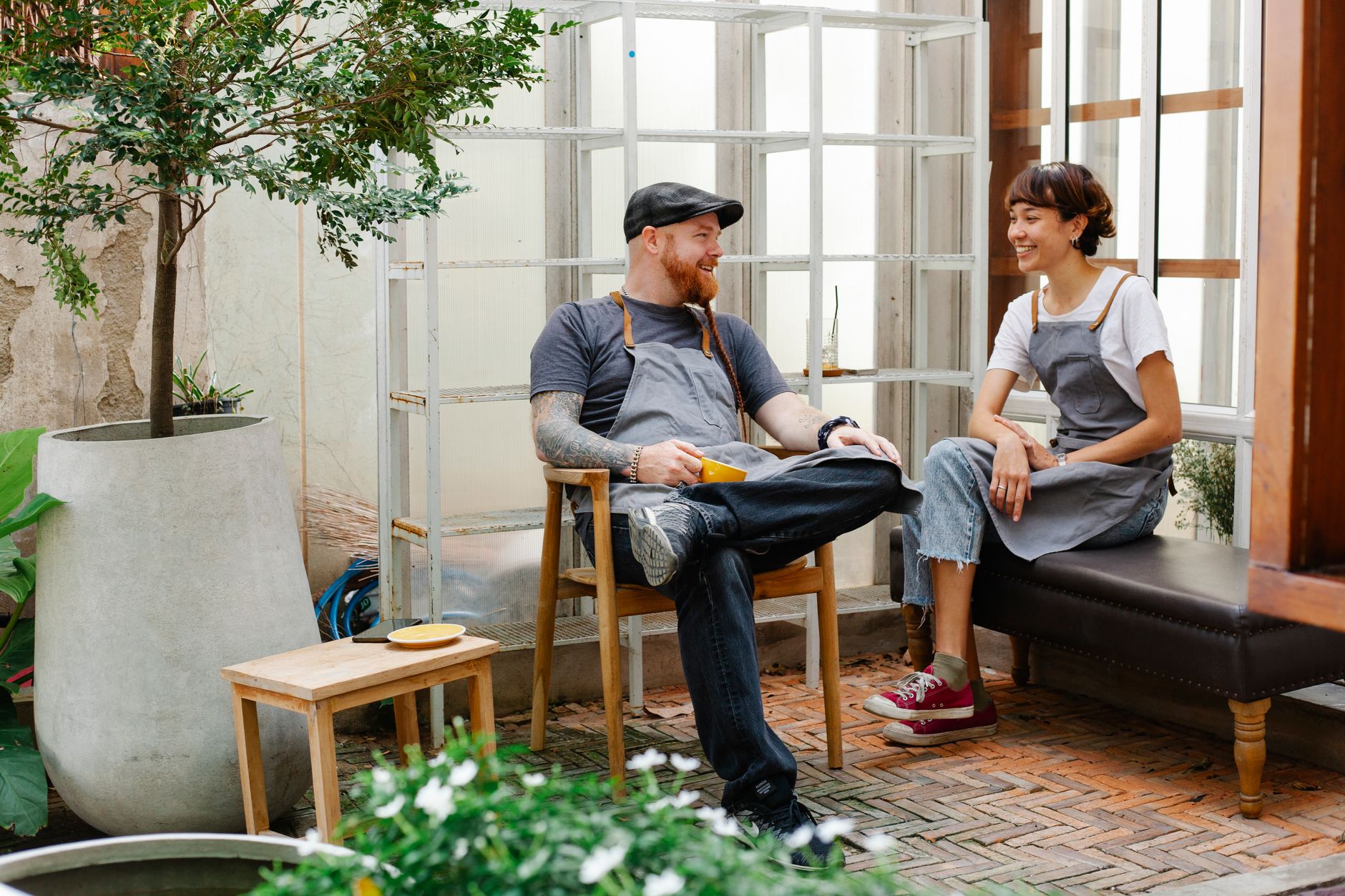
Make Your Centre Worth Talking About
Word of mouth is still the cheapest and most trusted form of marketing any small business has, and it rarely happens by accident. Research into why ideas and places spread, most notably Jonah Berger's work on contagious ideas, points to a handful of specific triggers that garden centres are unusually well placed to use. A seasonal display built for photographs, a towering pumpkin stack in October or a tunnel of fairy lights before Christmas, gives visitors something genuinely worth sharing, which does more marketing in one weekend than a paid advert does in a month. Tying your messaging to common, recurring moments, the first frost, half term, Mother's Day, Father's Day, gives people a built-in reason to think of you at exactly the right time, rather than hoping they remember on their own. A short, honest story, the nursery manager who has worked there for twenty years, the oldest tree on site, the family who have run the centre for three generations, travels further than any product description, because people repeat stories and rarely repeat a spec sheet.
None of this needs a big budget. It needs a deliberate decision about what is worth photographing, what is worth telling people, and what small, recurring moment in the calendar your centre wants to be known for owning.

Measure What Moves the Needle
A garden centre has a few numbers worth checking regularly, and they are not all about total sales. Footfall by week tells you whether your seasonal visibility work is landing before the rush rather than during it. Average transaction value tells you whether people are treating the visit as a browse or a proper trip out. Because catering represents 36% of total sales across the sector, as the GCA has reported, tracking what share of visitors also use the café is a genuinely useful proxy for whether the site is working as a destination rather than a quick stop. The freshness and volume of your online reviews matters as much as the star rating itself, since a thin pile of old reviews reassures nobody. None of these numbers needs expensive software to track. A notebook, a till report and a monthly check are enough to see whether the direction is right.