What Is Marketing for Florists?
Marketing for a florist covers more ground than most owners expect when they start. It is the local search and reviews that decide whether you appear when someone types "florist near me" on the morning of a funeral. It is the photographs of your arrangements that persuade a stranger your work is worth the price. It is the seasonal campaigns around Mother's Day and Valentine's Day that bring in the bulk of the year's revenue in a handful of weeks. And it is the quieter, steadier work of keeping regular customers, a weekly bouquet subscriber, an office with a standing order, a wedding venue that refers couples your way, coming back without having to be won over from scratch each time.
None of this happens against a background of easy conditions. UK retail sales volumes fell by 0.4% in September 2026, according to the Office for National Statistics, a reminder that footfall and spending cannot be assumed in any physical retail category, florists included. Flowers also carry a pressure most retail stock does not: they are perishable, they have a short shelf life, and unsold stock is a direct loss rather than something you can mark down next month. Marketing for florists has to work harder across a shorter window than marketing for most other small shops, which is exactly why it rewards a deliberate approach rather than a hopeful one.

Why Florists Need a Marketing Approach Built Around Moments
A customer buying flowers is rarely browsing in a considered way the way someone shopping for a sofa might. They have a moment. A birthday that slipped their mind until this morning, a funeral next week, a first date, an apology that needs saying with something more than words. They need a solution quickly, and the florist who gets the order is usually the one who came to mind first in that moment, not necessarily the one who would win an argument about quality if the customer had the time to compare.
That is the practical case for building your presence around the specific situations people buy flowers for, rather than around flowers in general. A general message like "beautiful bouquets, locally made" has nowhere to attach itself in a customer's memory. A florist known as the one people call for sympathy flowers, or the one every bride in the area asks about first, has built a link to a real moment, and that link is what gets recalled when the moment arrives. It is also worth resisting the urge to be everything to everyone. A florist who decides to become genuinely excellent at one or two occasions, weddings, say, or corporate accounts, and serves that group better than anyone else in town, tends to build a stronger reputation than one spreading thin effort across every possible customer. For the fuller picture of how a local shop builds this kind of presence across a whole market, our guide to marketing for local businesses covers the ground this sits inside.
How to Win the Big Seasonal Moments
Mother's Day is the clearest example of how much is riding on a handful of weeks each year. UK retail spending for Mother's Day is forecast to reach £18bn in 2026, representing 15% growth year on year, according to research from retail and shopper marketing agency Savvy, reported by Talking Retail. The same research found that 65 per cent of shoppers expect to celebrate Mother's Day in 2026, rising to 88 per cent among households with children, according to figures reported by Grocery Gazette. That is the bulk of your potential customer base already planning to spend, weeks before the date itself.
The harder, more useful number sits alongside it. Sixty-three per cent of shoppers said they would spend more if there were more interesting gift options available, according to the same Talking Retail research. Read that as permission rather than pressure. A sizeable share of the market is sitting there with money they are prepared to spend and nothing that has caught their attention yet. The florist who offers something genuinely distinctive for the occasion, a signature seasonal arrangement, an add-on gift box, a named bouquet customers can order by name next year too, is the one who captures that spending rather than losing it to a supermarket bucket that looked the same as last year's. Build the plan backwards from each fixed date, with pre-orders opening early and delivery slots booked well ahead, and the occasion stops being a scramble and becomes a campaign you run on purpose. Our guide to how to create a marketing plan sets out how to put dates like these on a calendar rather than reacting to them as they arrive.
Why Reviews Make or Break a New Florist Relationship
A gift of flowers is usually bought for someone who matters, which raises the stakes on choosing the right florist, and that is exactly where reviews come in. Reviews are a vital part of how people decide which business to use, with 97% of consumers reading reviews online, according to BrightLocal's Local Consumer Review Survey 2026. For a florist with a thin review profile, that is a direct barrier to being chosen at all. The same research found that 47% of consumers won't use a business with fewer than 20 reviews, and only 9% are willing to use one with five or fewer, BrightLocal reports.
Freshness matters as much as volume. The survey found that 74% of people seek reviews written in the last three months, according to BrightLocal, which means a glowing set of reviews from two years ago does less work than a steady trickle of recent ones. The fix is simple to describe and easy to let slip. Ask every happy customer for a review on the day you hand over the bouquet or dress the venue, while the moment is still warm, rather than hoping they remember a week later. This matters most around your busiest seasonal weeks, when the largest number of new customers are forming their first impression of you at once. A healthy flow of recent reviews also does real work for the people walking past your shop rather than searching online, which is the other half of being chosen. Our guide to how to increase footfall looks at how the two reinforce each other.

How to Build Repeat Custom Between the Occasions
The quiet months are where most florist marketing goes slack, and it is also where the real difference between a steady business and a feast-or-famine one gets decided. A florist with only a handful of customers naturally sees fewer of them buy, and those who do buy tend to come back less often than a bigger competitor's customers do. That pattern is not a reason to despair. It is a reason to keep acquiring new customers steadily rather than pouring all your effort into retaining the same small group, because growth tends to come from more people buying occasionally rather than from a few people buying constantly.
The practical version of this is building small, repeatable habits into the business. A weekly bouquet subscription gives customers a reason to think of you every Friday rather than only on an anniversary. A standing order with a local office or care home turns one sale into a recurring one. A simple monthly note to your regulars about what is in season, rather than a message only sent when you need a sale, keeps you present without feeling like a pitch. And a recognisable signature, the same wrapping, the same tone of voice on social media, the same style of arrangement, repeated every time, is what customers come to recognise without needing to read your name on the van. Our guide to brand strategy goes further into how that kind of consistency compounds over time. Picture a florist in a fictional market town, built around exactly this habit. For years its custom clustered around three or four annual occasions and sat quiet the rest of the time, until it added a weekly subscription and a monthly seasonal note, and the quiet months stopped being quite so quiet.
Why British-Grown Flowers Are Becoming a Marketing Advantage
Most cut flowers sold in the UK are imported, but that is shifting, and the shift is a genuine marketing opportunity for a florist willing to use it. British growers are slowly reclaiming market share, as sustainability goals and consumer preference drive demand, according to Strutt & Parker's Rural Hub. That matters because it gives a florist something genuinely different to say, rather than the same generic promise of beauty and freshness every competitor makes.
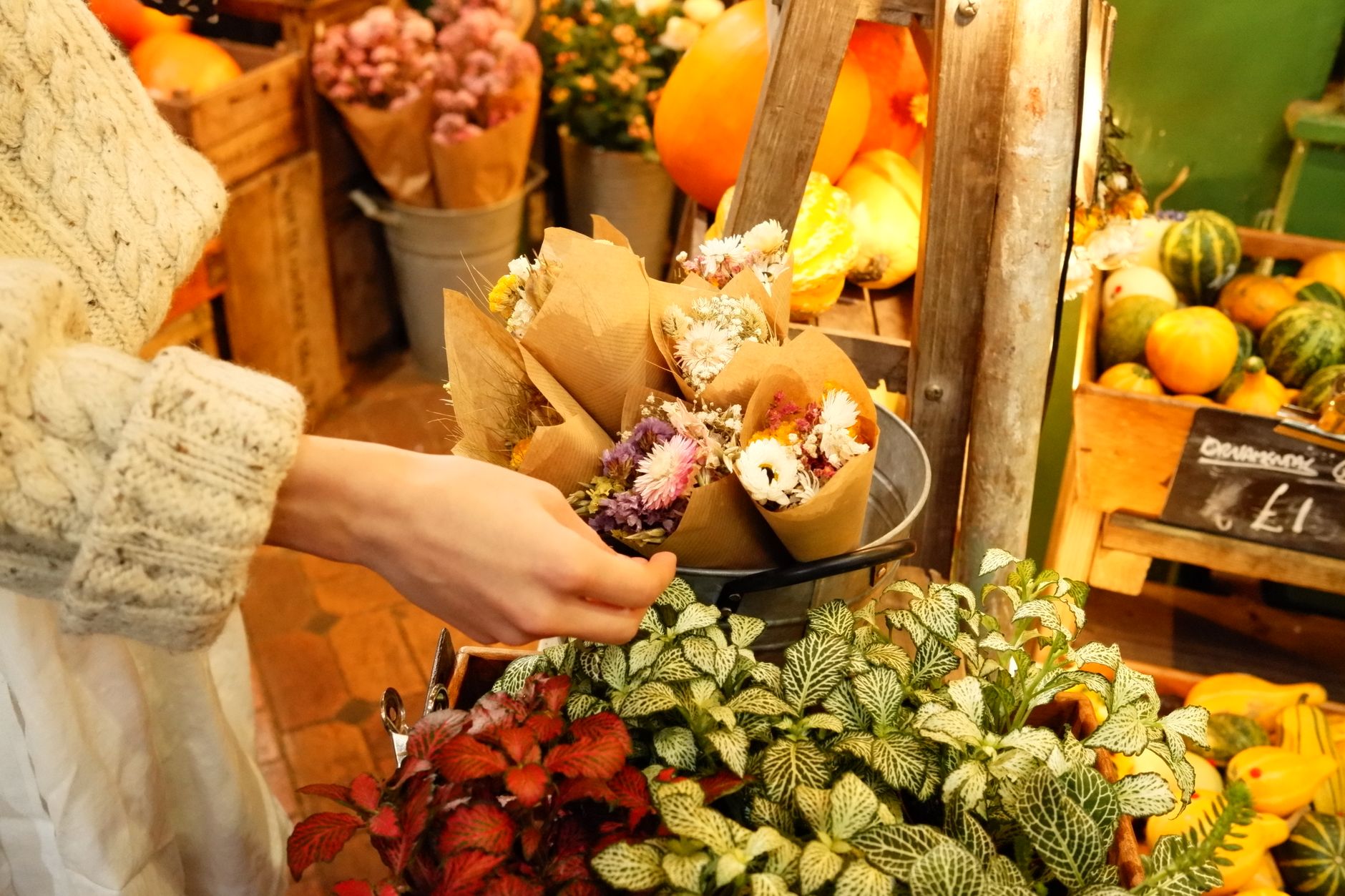
A florist who can point to specific British or locally grown stock, who can say where a bouquet's flowers came from this week, offers customers something worth mentioning to a friend, the kind of insider detail that makes a gift feel considered rather than bought off a generic supermarket shelf. It also sits well with a customer base that increasingly weighs sustainability into a purchase. None of this requires overhauling your supply chain overnight. It starts with naming what is seasonal and local on a chalkboard, a caption or a till receipt, and letting that honesty become part of what makes your shop recognisable.
How to Build a Florist's Marketing Calendar
Pulling all of this together does not need to be complicated. A florist's marketing calendar works best built around a small number of recurring habits rather than a long list of one-off ideas.
- List your fixed dates. Mark Valentine's Day, Mother's Day, Christmas and local wedding season on one calendar, then work backwards from each with a two-week run of content and open pre-orders.
- Ask for a review the same day. Make it part of finishing the job, whether that is handing over a bouquet or dressing a venue, rather than hoping a customer remembers later.
- Keep one recognisable signature. Choose a wrapping style, a tone of voice or a design flourish and repeat it every time, so it becomes what people recognise instead of needing to read your name.
- Build a simple regulars list. Email or text your returning customers once a month with what is in season and why, rather than only reaching out when you need a sale.
- Partner with the places your customers already trust. Local venues, care homes, salons and offices are worth more as a referral network than another burst of paid adverts. Our guide to marketing for local businesses covers how those local partnerships build on each other.
Five habits, kept up through the year, do more for a florist than a flurry of activity around one occasion and silence the rest of the time.