What Is a Slogan or Tagline?
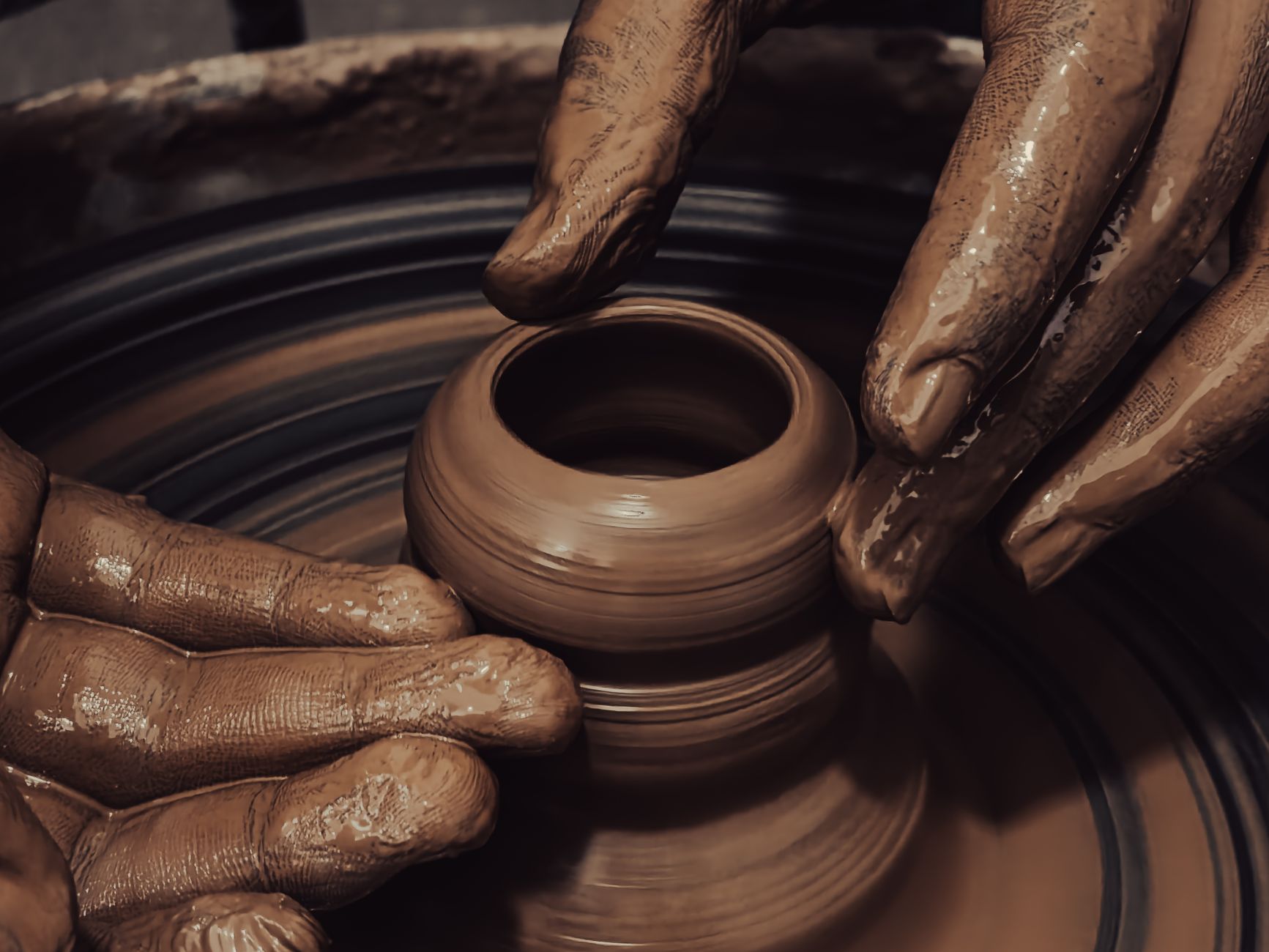
A slogan is a short phrase, usually five to ten words, that captures what your business stands for and repeats it consistently across everything you make and say. It sits alongside your name and your logo as one of the handful of things a customer recognises instantly, even before they have read a single word about what you sell. A potter working from a studio in Bristol might land on "Made by hand, held for life", a line that says nothing about clay or kilns and everything about the feeling a customer buys into. That is the job a slogan does. It is not a mission statement, which explains why you exist to your team. It is not a description of your product, which a customer can find elsewhere on the page. It is the shorthand that stands in for everything else, the phrase that does the remembering on the customer's behalf when they are not thinking about you at all.
Slogan vs Tagline: Is There a Difference?
In careful marketing language, a slogan and a tagline are not quite the same thing, though almost nobody outside an agency draws the line in daily use. A slogan is traditionally tied to a specific campaign or moment, a line built for a season or a launch that can change when the campaign ends. A tagline sits permanently underneath the brand, unchanged for years, the fixed phrase that always accompanies the name. In practice, a small creative business usually needs only one line that does both jobs, worn consistently rather than swapped out for every new collection or client. If you are choosing between a campaign-specific slogan and a permanent tagline, choose permanent. A photographer who changes her strapline every time she launches a new package spends years teaching customers a phrase, then throws that learning away and starts again. The businesses that get remembered are the ones that pick one line and let it do its work for a decade, not the ones chasing the cleverest new version every spring.

Why a Slogan Matters for a Small Creative Business
There were an estimated 5.5 million private sector businesses in the UK at the start of 2024, and small firms make up the overwhelming majority of that number. A graphic designer, a florist, an illustrator or a bespoke furniture maker is not simply competing with the handful of names in their own town. They are one voice among millions trying to be remembered, and small businesses with fewer than 50 employees account for 99.2 percent of the UK's total business population, which is precisely the crowd a memorable line has to cut through. A slogan is one of the cheapest tools a creative business owns for standing out in that crowd, because it costs nothing to repeat once it is written.
The effect is not a nicer-sounding brand. A study published in the Journal of Business Research found that recall of a brand's slogan feeds directly into how customers assess the brand overall, which in turn shapes real marketplace behaviour, whether someone chooses you over an alternative and how much of their spending they give you. Put plainly, the phrase you repeat is not decoration sitting beside your work. It is one of the mechanisms that decides whether a customer picks you.
The Marketing Science Behind a Memorable Slogan
Three ideas from marketing research explain why some slogans earn their keep for decades while most disappear within a year. The first concerns what a slogan is for. Research into brand distinctiveness treats a slogan as one of a small set of recognisable assets, alongside a name, a colour palette and a logo, that let a customer identify a brand in an instant without reading anything. A slogan does this job best when it stays fixed for years, because recognition is built through repetition, not through cleverness discovered once and then abandoned.
The second idea concerns what the slogan should do to a customer. The advertising tradition that runs from the street pedlar's song to the modern jingle has always understood that a slogan works by creating a feeling, not by winning an argument. A line that tries to prove a fact rarely lodges in memory the way a line that carries a feeling does. This is not a soft, unmeasurable claim. A 2025 study in Psychology & Marketing, built on three experiments using brands drawn from participants' own memories, found that nostalgic, feeling-led advertising produced stronger brand-name recall than advertising built on facts alone. A slogan that makes someone feel something, however small, has a real recall advantage over a slogan that only informs.
The third idea concerns what makes the line distinctly yours rather than one any competitor could claim. Positioning discipline holds that a strong slogan should reflect the one attribute you genuinely own against the real alternatives a customer is weighing you against, not a generic virtue every business in your category also claims. "Quality you can trust" says nothing, because every rival says it too. "Made by hand, held for life" says something only a maker who genuinely works by hand can say. The line should be the shortest possible version of your actual positioning, not a warm-sounding phrase pulled from a template. Our guide to positioning goes deeper on how to find that one true attribute before you try to compress it into a slogan.
One more finding worth knowing before you settle on a final line. A 2025 study in Cogent Business & Management found that varying the execution around a fixed message, different images, different contexts, different moments, strengthens recall, because it builds several separate memory traces to the same core content. The lesson for a slogan is not to keep changing the line itself. It is to keep the line fixed and let it show up in fresh settings, on a van, in an email signature, on a business card, on the back of a print, so each new setting adds another hook into a customer's memory rather than a new phrase to relearn.
How to Write a Slogan, Step by Step
You can draft a working slogan in an hour, though refining it to something you would still be happy repeating in five years takes longer. Work through these steps in order.
- Name the one true thing you do best. Before you write a single word of the slogan, write one honest sentence about what you offer that a genuine alternative cannot, not a virtue every competitor also claims.
- Write it the way you would say it out loud. Avoid the corporate phrasing that creeps into brand work. A slogan should sound like a real person talking, not a brochure.
- Cut it to five to seven words. Most memorable slogans are short enough to fit on a van door or the bottom of an email signature without shrinking the type. If you cannot say it in one breath, it is too long.
- Make it about the customer's outcome, not your process. "Made by hand, held for life" is about what the customer gets. "Handmade using traditional techniques" is about what you did. The first one sells. The second one explains.
- Say it out loud ten times. A slogan lives in speech as much as in print, read aloud at a market stall, said down the phone, repeated by a happy customer to a friend. If it trips your tongue on the fifth read, rewrite it.
- Test that it travels. Check the line still makes sense on a business card, a website header, a printed tag and a spoken introduction. A slogan that only works in one format is not yet finished.
Slogan Examples and What Makes Them Work
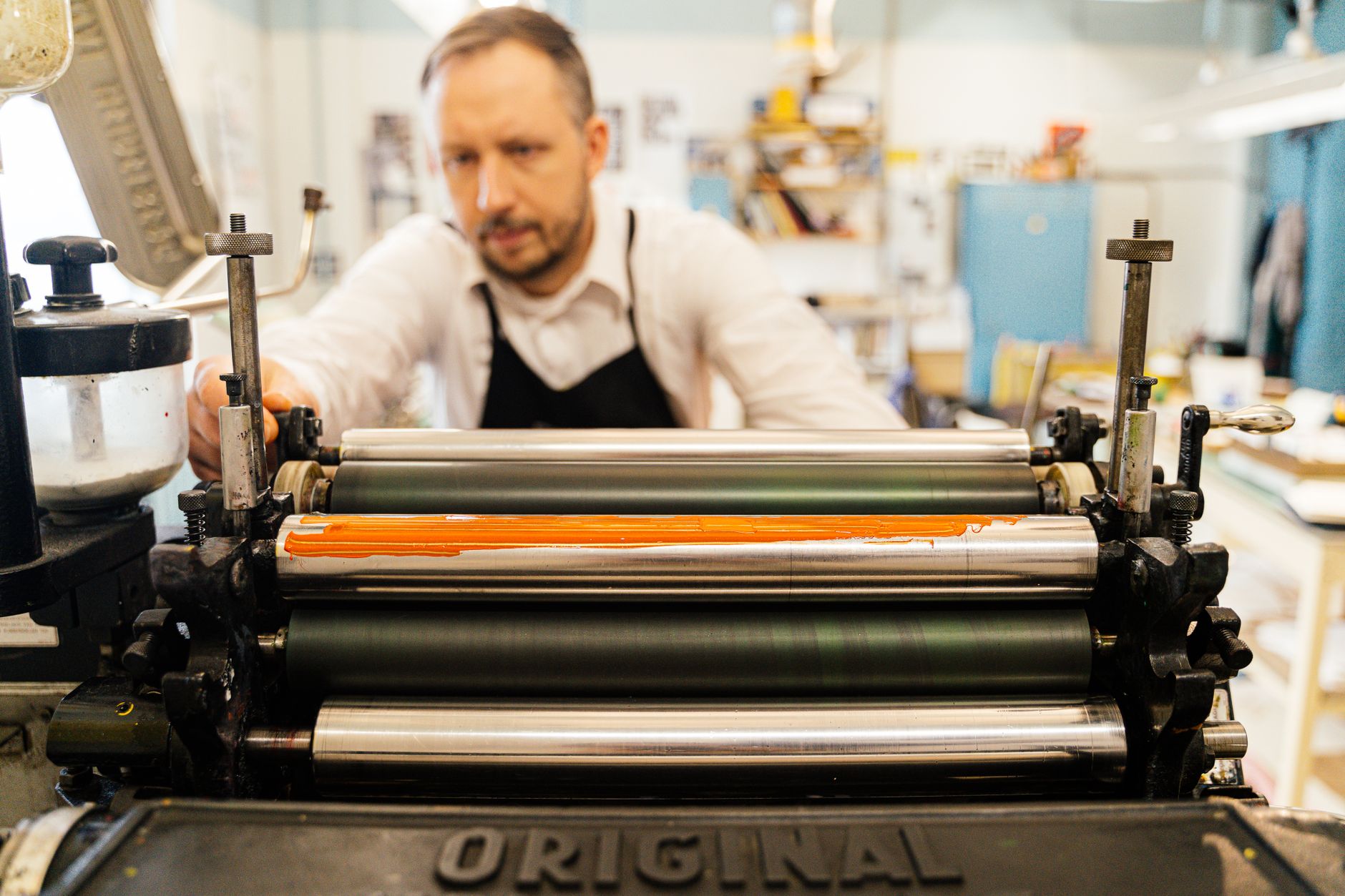
Concrete examples make the method clearer than any rule on its own. Picture a letterpress printer in Yorkshire whose slogan reads "Every letter, pressed by hand." Six words, no jargon, and it tells a customer exactly what makes the work different from a digital print shop down the road. Picture a wedding photographer whose line is "The moments you'll forget to notice." It says nothing about cameras or lenses and everything about the outcome a bride wants. Picture a small jewellery maker working from a home studio with the line "One piece, one story." Short, specific, and impossible for a mass-market jewellery chain to claim.
What all three share is restraint. None of them tries to say everything the business does. Each names one true thing and leaves the rest of the story to the website, the reviews and the work itself. Consistency does the rest of the heavy lifting. One piece of business research found that presenting a brand consistently across every touchpoint, the same line, the same colours, the same tone, has been linked to revenue increases of up to 23 percent, which is a striking return for something that costs nothing beyond the discipline of not changing your mind every few months.

Common Slogan Mistakes to Avoid
A handful of mistakes account for most forgettable slogans. The first is trying to say everything at once, cramming your quality, your speed, your price and your values into a single sentence until it reads like a list rather than a line. The second is reaching for words every competitor in your category already uses, quality, passion, excellence, none of which mean anything specific to a customer any more because they have heard them from everyone. The third is copying the tone of a much bigger brand, which usually produces a line that sounds like an imitation rather than a business finding its own voice.
The fourth mistake, and the costliest, is changing the slogan too often. An owner who feels bored of their own line after a year and rewrites it is throwing away the recognition the old line had started to build, and starting the clock again at zero. The evidence on brand consistency is blunt about this trade-off, and the honest fix is usually not a new slogan at all but a fresh way of showing the old one, a new photograph, a new setting, a new context, rather than new words.

How Long Should You Keep a Slogan?
Once you have a slogan that passes the tests above, hold it for years, not months. Recognition builds slowly, through the same phrase appearing in enough places often enough that a customer stops noticing it as clever and starts trusting it as familiar. Review it properly only once a year, or when something genuine changes in your business, a real shift in what you offer or who you serve, rather than a passing mood that the line feels stale. Between reviews, resist the urge to tinker. A slogan that feels a little tired to you after eighteen months is usually reaching the point where a customer is finally starting to recognise it, and that is exactly the wrong moment to abandon it. Consistency is not the boring cousin of creativity here. It is the mechanism that makes a slogan worth anything at all, in the same way a personal brand only compounds when the same voice and the same story show up again and again rather than reinventing itself every quarter.