

The Question I Used to Get Wrong
For years I sold retainers for a living, and I believed, because I had to, that the agency model was the right answer for almost everyone who could scrape together the fee. I sat in pitch meetings telling small business owners that strategy, creative and media all belonged under one roof, ours, and that trying to do it themselves would cost them more in mistakes than it would ever save them in fees. Some of that was true. Most of it was a sales pitch dressed as advice.
What I did not say, because it was not in my interest to say it, was that a sizeable share of what we billed for was work the owner could have done themselves with the right knowledge, and that the part they genuinely could not do, the specialist craft, the big creative swing, the production they had no equipment for, was usually a small slice of the invoice rather than all of it. I left the agency side believing the real service was not doing the marketing for someone. It was knowing which bits to hand over and which bits to keep, and almost nobody was selling that distinction, because there was no retainer in it.

Who Is Asking This
This question matters because of who is asking it, and the scale surprised me even after years in the industry. Across the UK's private sector, 4.1 million businesses, 74 percent of the total, employ nobody beyond the owner, against 1.5 million, 26 percent, that have staff at all, according to the latest GOV.UK business population estimates. Look at registered companies specifically and the picture sharpens further. Of the 2.2 million companies on the register, 43.0 percent are single-employee limited companies, according to the Office for National Statistics.
Read those two figures together and the agency question stops looking like a question about budget size and starts looking like a question about time. Most of the businesses asking it are not weighing an agency against an in-house marketing team, because there is no team, in-house or otherwise. There is one person, running the business and the marketing from the same desk, deciding whether to spend a precious hour writing a post themselves or spending money they do not have much of to make the hour go away. That is the real decision underneath this question, and it is a far more personal one than the agency pitch decks ever let on.

What an Agency Is For
I want to be fair to the industry I came from, because there is a genuine case for what an agency does well, and it is not what most owners think it is. Advertising, at its best, has never worked by arguing a case. The advertising historian Paul Feldwick traces this back to the street pedlar singing a tune to gather a crowd, where the song itself was the attraction and the brand message rode along inside it, a tradition that modern distinctive-asset research, the recognisable characters, colours and sounds that make a brand instantly identifiable, still bears out today. A good agency can build that kind of showmanship, a character, a visual world, a piece of craft that stops someone mid-scroll, in a way that is genuinely difficult for a single owner working alone to produce, simply because it requires a different skill set, often a different medium, and usually a few more hands.
Mark Schaefer makes a related point about where human creative work still earns its keep now that competent, average content can be generated for free. He describes a ladder of marketing work, from the commodity stuff any tool can now produce, up through considered and creative work, to what he calls audacious work, the brave, culture-shaping piece that only a human with a genuine point of view could have made. An agency that is worth its fee lives at the top of that ladder. The trouble is that most small business marketing never needed to live there in the first place. A weekly update to regular customers, an honest answer to a question people keep asking, a photo of the actual job finished yesterday, none of that calls for a showman. It calls for the owner, because the owner is the only person who was there.
The Hybrid Model Already Won at the Top
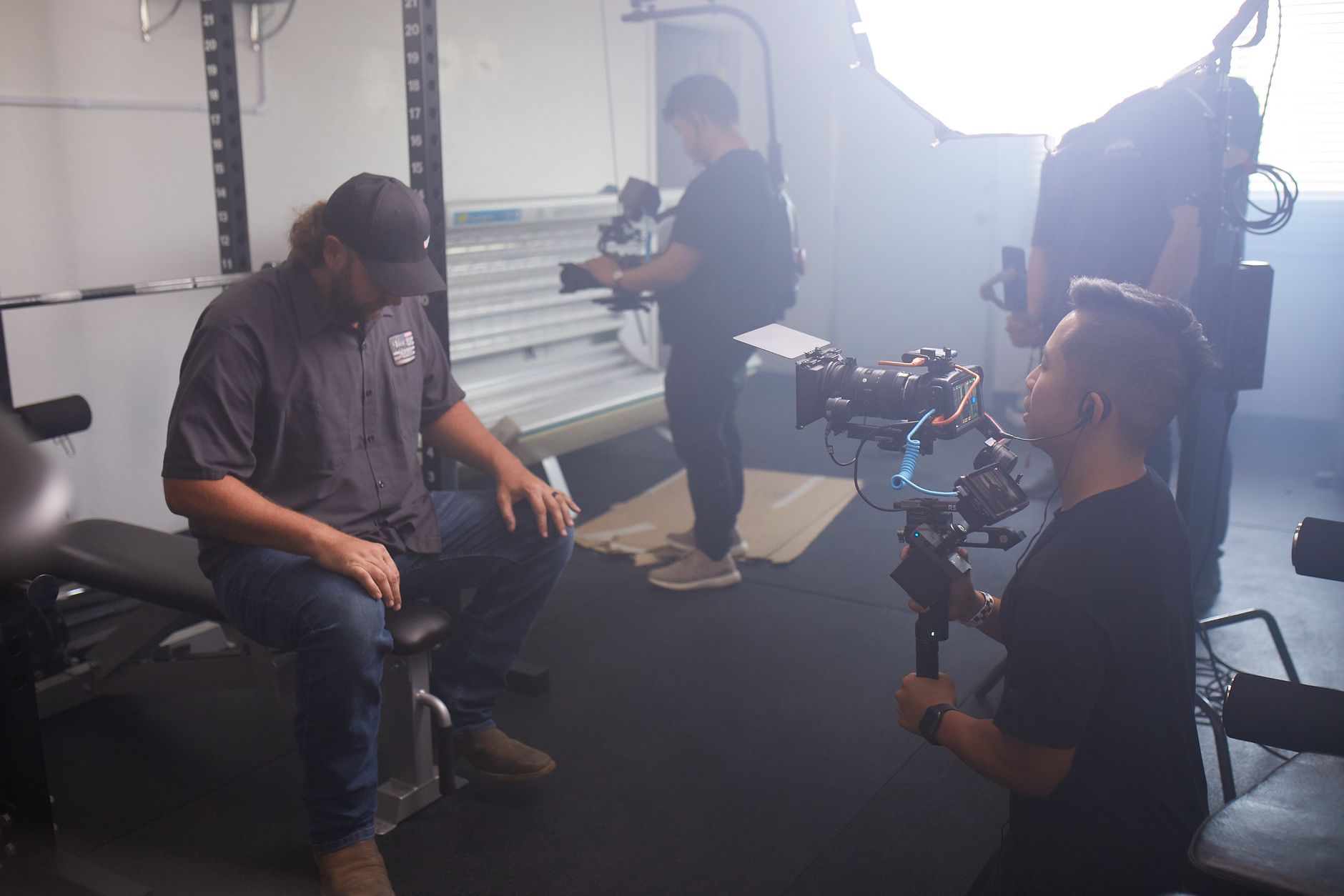
Here is what I find most useful about this moment, and it is something a small business owner can take real comfort from. Even the largest advertisers in the world, the ones who could in theory afford to run everything through an agency or everything in-house, have stopped choosing one or the other. Nearly 80 percent of the largest advertisers surveyed describe their current setup as hybrid, mixing internal teams with agency support, rather than picking a side. The debate about whether to build in-house or outsource has effectively been settled, and the answer was neither extreme.
What is changing is what the in-house side of that hybrid is trusted to do. Fifty-three percent of marketers now agree that the primary role of an in-house team is to act as a strategic partner, sitting in on the upstream strategy and delivering the bold, brand-building work itself, rather than simply executing briefs an agency wrote. And the shift is accelerating faster than that figure alone suggests. New survey data fielded by NewtonX found that 32 percent of brands expect to handle nearly all of their creative work in-house within twelve months, with a further 23 percent expecting to bring at least half of it in-house in that time. The direction of travel among companies with every resource available to them is towards keeping the thinking close and buying in the specific, specialist execution they genuinely cannot do themselves. A small business making exactly that same call is not behind the curve. It is ahead of most of the industry's biggest spenders, who are only now arriving at a conclusion the one-person business reached out of necessity years ago.

Why Brand Work Cannot Be Switched Off and On
There is a reason the strategic thinking belongs close to the business rather than handed wholesale to an outside party, and it comes down to how a brand grows. Byron Sharp's research on mental availability describes the win condition plainly: to win customers, a brand has to be easy to think of in the moments people are deciding, and easy to find and buy once they have decided. That first part, being easy to think of, is not a one-off asset you can commission and file away. The Ehrenberg-Bass Institute's own research is blunt about what happens if you stop tending it. Without refreshment, mental availability erodes, reported by Marketing Week. Recognition fades the moment you stop showing up.
This is the part of the agency question that trips owners up most. An agency can design the distinctive assets, the colours, the voice, the recurring character or phrase. An agency cannot be in the room every week when a customer asks the question that becomes next week's post, or notice the small thing that went right on a job and is worth photographing before it is forgotten. The steady weekly refreshment that keeps a brand in people's heads has to come from inside the business, because it is made of the business's own daily material. You can commission the foundation. You cannot outsource the showing up.

What to Keep Close and What to Hand Over
So where does that leave the actual decision. I think of it as two different kinds of marketing spend, and they deserve two different answers. One kind is what the Long and the Short of It framework calls sales activation, spend aimed at people who are already ready to buy, designed to get a response right now: a search ad, a discount, a retargeting banner, a sales call. The other kind is brand building, the slower work of staying easy to think of for the much larger group of people who are not ready to buy yet. Both matter. They do not call for the same hands.
Activation work is often where an agency or a specialist freelancer earns their fee cleanly, because it is bounded, measurable and genuinely technical: setting up a search campaign correctly, writing conversion-focused copy for a landing page, managing an ad account so the budget is not wasted on the wrong audience. Bring in help here and you can usually see whether it worked within weeks. Brand building is different. It runs on consistency, on the owner's own voice staying recognisable week after week, and on the small, true details about the business that nobody outside it would think to include. Picture, purely as an illustration, a small physiotherapy clinic in Preston run by one owner. She could pay an agency a monthly fee to post generic wellness content on her behalf, and it would look professional and say nothing anyone would remember. Or she could spend twenty minutes herself each week writing about the actual patient she helped get back to running, in her own words, which is the one thing nobody else could write for her. The first is activation dressed up as brand work. The second is the real thing, and it was never an agency's job to begin with.

The Economics Are Moving Underneath the Question
Even the agency industry itself is being honest about the pressure it is under, which should factor into how an owner weighs this decision. Marketing budgets are not standing still. The IPA's Bellwether survey for the third quarter of 2026 found a net balance of +14.3 percent, with over a quarter of panellists raising their budgets and only 11.3 percent reporting a cut. That is a vote of confidence in marketing spend broadly, and it is worth noticing where that confidence is pointed, because it is not pointed uniformly at traditional agency retainers.
eMarketer's outlook for the sector names the pressures plainly: ad agencies face AI disruption, consolidation, in-housing and economic pressure, all at the same time. An industry under that much structural pressure is not always the steadiest place to park a small business's entire marketing function, particularly the strategic thinking that defines who the business is and who it serves. This is not an argument against ever using an agency. It is an argument for being precise about what you are buying from one, so that if the relationship or the retainer changes, which the current market suggests it increasingly will, the business's core understanding of itself was never dependent on it staying put. Our guide to what a marketing agency does goes further into the different models and what each one is realistically good for.

A Simple Test Before You Sign a Retainer
Over the years I built a rough test for myself, and I still use some version of it when I am advising a founder on this exact question. Before bringing anyone in, ask three things. Is this a piece of specialist craft I genuinely cannot produce myself, no matter how much time I gave it, like a complex video production or a large media buy. Is this a decision about who I am and who I serve, the kind of thing only the person who built the business can answer. And is this work that needs to happen every single week, in my own voice, drawing on things only I would notice.
If the answer to the first question is yes, bring in help, and pay properly for it, because specialist craft done badly is worse than not doing it at all. If the answer to either of the last two is yes, keep it close, no matter how tempting the retainer sounds, because an agency cannot be you, and the moment it tries to be, the work starts to sound like it was written for any business rather than yours specifically. Most of what sits inside a small business's actual weekly marketing, the posts, the replies, the honest updates, falls into that second and third category far more often than owners assume when they first start pricing up agencies.

The Risk of Getting This Wrong in Both Directions
I want to be straight about both failure modes here, because I have watched owners fall into each one. The owner who outsources everything, including the thinking, ends up with marketing that is polished and forgettable, because the agency, however good, never knew the business the way the owner does, and nobody told them about the small true details that would have made the work distinctive rather than generic. They pay a retainer for content that could have come from any business in their category, and six months later they cannot explain why it has not moved the number that matters to them.
The owner who refuses any outside help at all runs the opposite risk. They end up doing specialist work badly, a video that looks amateurish when it did not need to, a media budget wasted because nobody understood how the platform's auction worked, time poured into a skill that was never going to pay off compared with ten minutes spent on the thing only they could do. Both mistakes come from the same root cause, treating this as one decision rather than many small ones, made section by section, about which specific piece of work genuinely needs an outside hand and which piece needs the owner's own voice behind it.

What This Asks of the Owner
None of this works without the owner first understanding their own marketing well enough to make the call, piece by piece, rather than handing the whole question to whoever pitches the hardest. That is the belief the whole of Starlight Tech is built on. We are building Compass to put agency-level thinking into the hands of the person running the business, so that the strategic choices, who you serve, what you stand for, which buying moments you want to own, get made with real research behind them rather than guesswork, and so the owner keeps the judgement that no outside party can responsibly hold for them.
That does not mean Compass replaces every reason to ever bring in outside help. It means an owner using it already knows, before any agency conversation starts, what they are trying to achieve and why, which turns a vague sense of being behind into a precise brief for whatever specialist craft they genuinely need, and a clear refusal for everything they do not. The parts of the work that compound, the weekly consistency, the honest voice, the steady refreshment that keeps a brand easy to think of, stay with the owner and get easier over time rather than more expensive, because Compass is built to help someone get better at this as they go, not to make them dependent on the next invoice.

The Decision Is Yours to Keep
So, should a small business hire a marketing agency. Sometimes, for the specific, bounded, specialist work that genuinely needs a different set of hands, and never for the whole of it. The question that matters is narrower and more useful than the one most pitch decks ask you to answer. It is not agency or no agency. It is which pieces of this work are mine to do, because nobody else was in the room when it happened, and which pieces are worth paying someone else to do properly. I spent half my career selling the first answer to people who should have been asking the second question all along. I would rather spend the second half helping them ask it properly, and keep the parts of the work that were always theirs to keep.