
The Old Channels Have Stopped Doing the Heavy Lifting
Think about what marketing used to mean for a small business. You bought some reach through an advert or a leaflet drop. You repeated your name often enough that people recognised it. You said something persuasive enough to nudge a decision. Each of those levers still exists, but each has been worn smooth by overuse. Paid reach is available to every competitor with a card machine, so it buys attention rather than belief. Frequency is easy to fake with a scheduling tool and a content calendar, so seeing a name often no longer means anything about whether that name deserves to be trusted. Persuasive words are the cheapest thing on earth to produce now, so a clever headline proves nothing about the business behind it.
What none of those levers can manufacture is belief. A person can see your advert five times, hear your name repeated on the radio, and read a beautifully written page, and still choose the plumber their sister used last winter, because the sister vouched for him and the advert did not. That gap, between attention and belief, is where the whole game now sits. Attention has become close to free. Belief has to be earned business by business, and there is no shortcut round it, which is exactly why it has become the channel worth building a business on.

Why the World Arrived Here
This did not happen in a vacuum. People are not simply tired of marketing. They are living through a broader collapse in confidence in the institutions that used to vouch for things on their behalf. Edelman's 2025 Trust Barometer found that 61 percent of people globally report a moderate or high sense of grievance, a belief that government and business make their lives harder while serving narrow interests rather than the public they claim to serve, according to Edelman's 2025 Trust Barometer. That is not a niche mood. That is a majority of the people any small business is trying to sell to, walking around assuming the deck is stacked against them before your advert has even reached their screen.
It gets bleaker the further out you look. The same research found that only 36 percent of respondents believe things will be better for the next generation, and in developed countries that figure falls to one in five, according to Edelman's Global Top 10 2025 Trust Barometer findings. A population that has stopped expecting things to improve does not extend the benefit of the doubt easily. It checks. It asks around. It waits for proof before it hands over money to a business it has never met. Grievance and pessimism are not abstractions for a marketer to file away. They are the actual weather a small business now sells into, and pretending otherwise is how a perfectly good campaign lands with a thud.

Trust Has Moved From the Institution to the Business Doing the Work
Here is the part that should give a small business owner some genuine encouragement, because the same research carries good news buried inside the bad. As trust in governments and large institutions has slid, it has not disappeared. It has relocated. Edelman's brand trust special report for 2025 found that people now trust their own brands, the specific businesses they choose to buy from, more than they trust the institutions those businesses sit within, describing a shift the report frames as moving from "we" to "me," according to Edelman's 2025 Brand Trust special report. People have stopped extending trust upward, to parliament, to the regulator, to the faceless sector, and started extending it sideways instead, to the specific baker, the specific accountant, the specific business with a name and a face they recognise.
That relocation is the opportunity hiding inside the crisis. A small business was never going to win a trust contest against a government or a multinational on its own terms, and it does not need to. It only has to win the trust of the people it serves, one relationship at a time, and the data says people are more ready to grant that trust than they have been in years, provided the business shows up as a real, accountable thing rather than a logo. A large corporation has to defend an institutional reputation built by thousands of people it has never met. A small business only has to be believable as itself, and that is a fight it can win.

The UK Backdrop: A Public Primed to Doubt and Ready to Act
The UK picture inside this global mood is its own kind of instructive. Trust in the UK government rose from 39 percent in 2024 to 43 percent in 2025, yet that figure still sits inside what Edelman classifies as the distrust zone, according to Creative Salon's summary of the UK findings from Edelman's 2025 Trust Barometer. A small uptick against a backdrop that is still, on balance, distrustful. That is the texture of the market a UK small business is marketing into this year. People are not implacably hostile, but they are not starting from a position of goodwill either, and every claim you make has to clear that bar before it does any persuading at all.
The same UK data shows something sharper still. One in three people in the UK now see hostile activism as a viable means to drive change, and that figure rises to six in ten among those aged eighteen to thirty-four, according to the same Creative Salon reporting on the 2025 UK findings. Read that as a temperature gauge rather than a political statement. A meaningful share of your younger customers have concluded that patience with institutions that let them down has run out, and they are willing to act on that. A business that behaves like another institution, evasive, defensive, quick with a corporate line when something goes wrong, is marketing straight into that mood. A business that behaves like a person who owns its mistakes is marketing against the grain of it, which in a doubting market is precisely where the advantage sits.

Why Showmanship Still Earns Trust the Rational Pitch Cannot
There is a temptation, once you see all of this, to respond with more reassurance copy. More badges, more claims of honesty, more paragraphs explaining why you can be trusted. It rarely works, and there is a good reason why. Advertising has never operated by argument. It has always worked closer to showmanship, entertaining people and building a warm association over time, rather than persuading them with a watertight case. The street pedlar who drew a crowd with a song sold more than the one who stood silently with a sign listing the virtues of his wares, because the song did the work the sign could not.
The same holds today. A business that tells you it is honest is asking for trust it has not yet earned. A business that simply behaves consistently, shows its actual work, tells a story with a real person in it, and turns up in the same recognisable way month after month, earns that trust without ever having to claim it. This is why the small bakery with a handwritten note about a batch that did not rise properly builds more belief in a sentence than a corporate apology page builds in a thousand words. It is not making a case. It is showing you a real person taking responsibility, and showing beats telling every time trust is the thing at stake.

Why Consistency Beats Cleverness
There is a second, quieter law working underneath all of this, and it explains why some small businesses become trusted names in their area while others with equally good work stay invisible. Trust does not arrive in a single clever moment. It compounds through repetition, the same name, the same look, the same tone, showing up again and again until recognising you and trusting you become almost the same reflex in a customer's mind. Brands that grow do so by staying easy to notice and easy to recall in the moments people are deciding, built through consistent, distinctive presence rather than through one especially persuasive burst of messaging.
For a small business this is close to freeing, because consistency is available to anyone regardless of budget. A window cleaner who uses the same van signage, the same friendly tone in every message, and turns up on the same day each fortnight without fail is building exactly the same kind of asset that a national brand spends millions maintaining. The customer may never articulate why they trust him over a stranger who quoted five pounds cheaper, but the reflex is doing the work. He is the one who is always there, always the same, always as promised. That is what makes a business feel safe to hand money to before a single word of persuasion is spoken, and it is a discipline any small business can practise starting this week.

Why the Safe, Generic Choice Is Now the Riskiest One
Something else has shifted the ground under this whole conversation, and it is worth being honest about it. Producing content, adverts, even whole campaigns, has become close to free. Any business can now generate a polished-looking post in seconds, and most are doing exactly that. When competent, professional-sounding marketing is available to everyone at no cost, competent and professional stop being distinguishing qualities. They become the baseline, the thing every business now clears without effort, which means they can no longer be the thing that earns anyone's trust.
What still cannot be generated by a prompt is a business willing to say something specific, take a real position, admit a real flaw, or stand behind a claim with its own name attached rather than hiding behind a house style that could belong to anybody. The safe, polished, inoffensive post that could have come from any business in your category is now the least trustworthy thing you can publish, precisely because it is indistinguishable from the flood everyone else is producing the same way. The business willing to be specific, honest and a little unguarded is doing the one thing left that a machine cannot fake convincingly, which is standing behind its own words as a real, accountable person. That willingness to take the visible risk of being plainly yourself, rather than hiding inside the safest possible sentence, is what now separates a business people trust from one they simply scroll past.

What Trust Looks Like in Practice
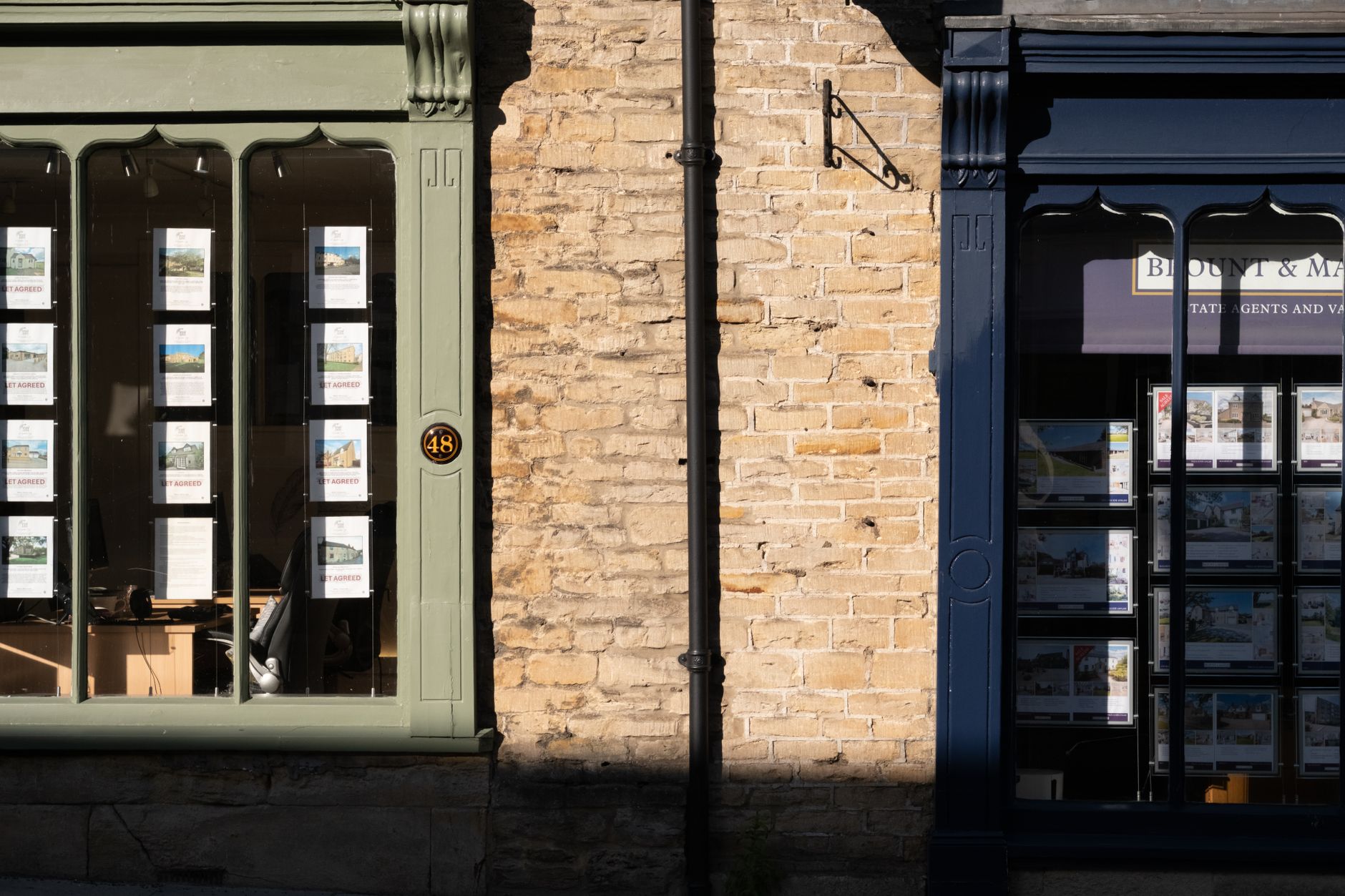
Let me make this concrete, because none of it means much until you can picture it. Consider an independent estate agents in a Yorkshire market town, run by a husband and wife team for eleven years, competing against a national chain that had opened a glossy branch two doors down with a marketing budget the couple could never dream of matching. The old instinct would have been to fight on the same ground, more adverts, a flashier window display, a race they were guaranteed to lose. Instead they leaned into the thing the chain could not copy. They put their own names and faces on every listing rather than a corporate template. When a sale fell through because of an honest survey finding, they told the seller straight away rather than letting the buyer's solicitor break the news, and they helped find the next buyer at no extra charge. They asked every client, win or lose, for an honest review, and they answered the bad ones themselves, in their own words, without a script.
None of that cost much. All of it built the one asset the national chain, for all its budget, genuinely could not buy, which was a reputation for straight dealing that the whole town could recite by name. Within two years they were fielding more valuations than the chain, not because their marketing was louder, but because in a town where everyone talks, they had become the agents people trusted to tell them the truth about the worst news as readily as the best. That is the mechanism the wider word of mouth research keeps confirming, that recommendation carries more weight than almost anything a business says about itself, and it only exists because trust was earned first.
The Sectors Where Trust Already Pays a Visible Premium
If you want proof that trust behaves like an asset with a price, look at where it has been measured directly. Financial services, one of the categories people have most reason to be wary of after a decade of scandal and small print, saw trust rise two points globally to 64 percent in 2025, and the sector was trusted overall in seventeen of the twenty-eight countries surveyed, according to Edelman Smithfield's 2025 report on the financial sector. That is a category built almost entirely on trust as the product, and it shows that trust can be rebuilt deliberately over years even in a sector that has given people every reason to doubt it.
The lesson travels directly to a small business in any trade. If a category as scarred as financial services can rebuild trust through consistent, verifiable behaviour, a local accountant, a physiotherapist, a tradesperson or a small software company has an easier hill to climb, provided they treat trust as something to build on purpose rather than something that simply follows from doing decent work. Decent work is necessary. It has never on its own been sufficient, because a customer cannot see your decent work before they buy. What they can see is how you have behaved with everyone else, which is why the visible proof, the reviews, the plain talk, the willingness to be checked, matters as much as the work itself.

The Businesses That Will Win the Trust Contest, and the Ones That Will Lose It
Two kinds of small business are heading into this decade, and the fork between them is not talent or budget. One business keeps marketing the old way, chasing reach, repeating a polished message, hoping volume and cleverness will do what they used to do. It will find both of those levers producing steadily less, because the audience has grown used to tuning out exactly that kind of noise and has grown warier of institutions in general along the way. The other business treats trust itself as the thing to build, deliberately, over years, through consistency, honesty about mistakes, visible proof from real customers and a willingness to be a specific, accountable person rather than a generic brand voice.
The tools available to both businesses are identical. Either can buy the same advertising, use the same content tools, post at the same frequency. The outcome will not be close, because one is spending its effort on the levers that have stopped working and the other is spending it on the one lever that a doubting, grievance-heavy, overloaded market still responds to. This is not a comforting parity where everyone muddles along. It is a genuine fork, and which side of it a business lands on is a choice its owner makes every week, in how they talk to a disappointed customer and how consistently they show up as themselves.

What This Asks of the Owner
None of this is complicated to understand and none of it is easy to do, which is precisely why it works as a competitive advantage rather than a slogan. It asks an owner to tell the truth when the truth is inconvenient, to answer for mistakes with their own name rather than a customer service script, to keep showing up in the same recognisable way long after it feels repetitive, and to resist the pull towards the safest, blandest version of every message, because safe and bland are now the most crowded, least trusted lane on the road. It asks patience too, since trust compounds slowly and nobody believes a business that claims to be trustworthy in its first sentence. You earn the right to be believed by being checkable, and then by surviving the check.
This is not a call to abandon everything else marketing can do. Reach still matters, a clear message still matters, and a sound plan for where you show up still matters, which is why it is worth being clear-eyed on what a marketing strategy is before you start layering trust-building on top of it. But every one of those older levers now works only in proportion to the trust behind it. An advert from a business nobody believes buys nothing. An advert from a business people already trust does the job it was always meant to do. Trust is not a nice addition to the plan any more. It has become the multiplier that decides whether everything else in the plan produces anything at all.

Where I Am Building From Here
I think about this constantly in how we are building Starlight Tech. A tool that helps a small business post more often, more cleverly, more persuasively, without helping them become more trustworthy, would be solving the wrong problem entirely in a market like the one the data describes. So the part of Compass I care most about is the part that starts by genuinely understanding a business, the research that grounds the marketing in what is true about that business rather than a generic template, because trust cannot be manufactured from a template. It has to be built from the real thing an owner does every day, described and repeated consistently until a stranger recognises it without needing to be told.
The part that matters as much is that Compass is built to make an owner better at this over time rather than more dependent on being told what to say, learning the craft as they go, because trust that a business earns for itself, in its own voice, will always outlast trust borrowed from a clever line a piece of software wrote for it once and never explained. A business that understands why its honesty works, why its consistency compounds, why a straight answer to a bad review does more good than a defensive one, will keep doing those things long after any tool has moved on to the next feature. That is the only kind of help worth building in a market where the one channel still working is the one no shortcut can fake.

The Channel That Cannot Be Bought
Every other channel a small business has relied on has become cheaper to access and easier to ignore, which is precisely why it has stopped being decisive. Trust is the one channel that still has to be earned individually, business by business, and a doubting, grievance-heavy public has made it more valuable rather than less, because a public that has stopped believing institutions has not stopped wanting somewhere to put its belief. It has simply moved that belief closer to home, towards the specific business with a name, a face and a record it can check. The small business owner who understands that, who trades cleverness for consistency and reassurance copy for honest behaviour, is building the one asset that a bigger budget cannot buy outright and a shortcut cannot fake convincingly. After twenty-five years watching every other lever get crowded out, I believe this is the one still worth building a whole business around, because it is the last one left that only works when it is genuinely true.