What Is Tone of Voice, and How Is It Different from Brand Voice?
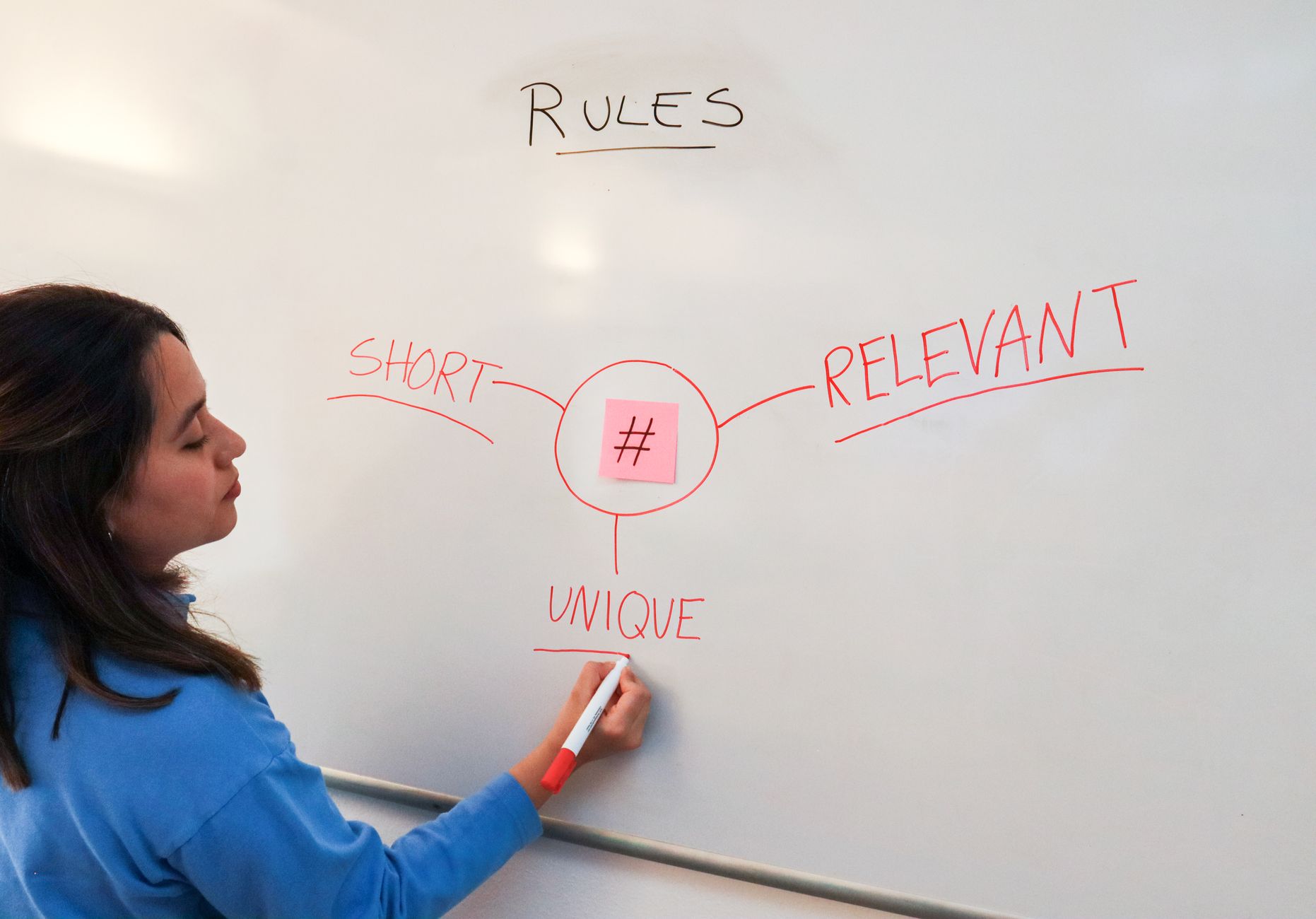
Brand voice is the personality itself, the stable traits that describe who your business is when it talks: warm, direct, a little wry, whatever genuinely fits. Tone of voice is how that personality flexes for the moment, the same person sounding reassuring in a complaint reply and upbeat in a product launch post. One is the character. The other is the delivery, adjusted to the situation while the character underneath stays the same. A dog groomer whose brand voice is warm and down to earth still needs a firmer, calmer tone when she writes to a client whose dog had a bad reaction to a shampoo, and a lighter tone when she posts a before-and-after photo on a Friday afternoon. The voice has not changed. The tone has, because the moment called for it.
Confusing the two is the most common mistake owners make when they sit down to write this out for the first time. Our deeper guide to brand voice walks through how to define that underlying personality in the first place, the traits you want to be known for, which this piece assumes you are either shaping alongside or have already settled. Tone of voice is the layer on top, the set of rules for how that personality shows up differently in a thank-you email, a price list and a social post, without ever sounding like three different businesses.

Why Does Tone of Voice Matter for a Small Business?
Tone of voice is one of the distinctive assets a business can own, alongside a logo, a colour or a jingle, and the evidence says holding it steady pays off in business terms rather than only in goodwill. A joint System1 and IPA study of brand consistency found that the top fifth of the most consistent brands achieved 28% more very large business effects, covering sales value gain, profit gain and market share gain, than their less consistent rivals, according to Research Live. The most creatively consistent brands in the same study averaged a Star Rating of 3.3, predicting good long-term brand-building potential, against 2.8 stars for somewhat consistent brands and 2.6 stars for the least consistent, found the Institute of Practitioners in Advertising.
What separated the consistent brands from the rest was not an expensive creative department. The study named consistent creative foundations such as brand positioning and the creative idea, a culture of reusing creative assets rather than starting fresh each time, and consistent execution of brand assets, tone of voice and the brand slogan, according to the same Research Live report. None of those three things requires a large budget. They require a decision, written down, and the discipline to keep using it.
This is mental availability at work in your words. A tone your customers recognise without needing to see your logo builds the same kind of recall that gets you chosen at the moment they are ready to buy, the plumber whose texts always sound like him, the bakery whose captions always sound like them. A business that changes its tone every time someone new writes a post is spending effort building a memory structure and then knocking it down before it sets.

What Should a Tone of Voice Include?
A working tone of voice document does not need to run to pages. It comes down to a handful of parts, each short, each held to.
A small set of words you use and words you avoid, so a physiotherapy clinic says "session" rather than "workout" if that is the feeling it wants to give, and a children's tutor says "learn" rather than "study" because the word carries less pressure. A sentence length and rhythm, short and plain for a tradesperson's quotes, longer and more considered for a design studio's case studies. A formality setting, where you sit between stiff and chatty, and holding that setting steady even when a particular reply feels like it wants to drift. A humour rule, naming where lightness is welcome and where it is never appropriate, such as a complaint reply. And a short set of worked examples, a few real sentences that sound like you and a few that do not, so anyone writing for the business, a new hire, a freelancer, or a tool, has something concrete to check against.
Where these choices come from matters more than most owners assume. Tone of voice should follow from what you decided to be known for in the first place, the positioning you chose and the customer you chose to serve. Our guide to brand strategy sets out that groundwork, because a tone invented in isolation from your positioning tends to drift, while a tone built on top of a clear positioning writes itself far more easily.

Why Plain Language Builds Trust
Whatever personality you choose, plain language outperforms clever language more often than owners expect. Research cited by the ONS Service Manual found that 80% of people prefer sentences written in plain language over the dense or jargon-heavy alternative. The team behind GOV.UK's own content research found something sharper still when it tested how readers respond to official writing: participants preferred language that was direct but not too chatty, according to GOV.UK, the warm, informal tone that feels friendly to the person writing it can read as try-hard to the person reading it.
The same GOV.UK research pointed to a second trap. Black and Stanbridge found that users can react negatively to a writing style that over-uses motivational features, interpreting it as patronising or inappropriate, a finding reported on the same GOV.UK page. For a small business the lesson translates directly. A tone of voice that is warm does not need to gush, and a tone that is direct can still be kind. The safest setting most businesses can choose is closer to plain and considerate than it is to either stiff or relentlessly upbeat.

Should You Use AI to Write in Your Tone of Voice?
AI tools can hold a tone of voice document in mind and draft within it faster than any person, which makes them genuinely useful once your tone is written down clearly. What they cannot do safely on their own is choose the tone for you, because audiences are increasingly alert to the difference between a person and a machine writing. New research shared at the Cannes Lions Festival of Creativity found that 78% of consumers believe AI makes adverts feel less authentic, and the same share said they find brands cringey when they overuse AI, according to Marketing Brew.
The sensible approach is to treat AI as a drafting tool that needs a tone of voice document to follow, with a person checking the result still sounds like the business rather than the tool. Fed your word list, your sentence rhythm and your worked examples, AI can draft a good first pass of a product description or a reply template. Left without any of that, it will default to the same safe, generic register every other business's prompt produces, the exact sameness the research above shows customers have started to notice and mark down.

How to Develop a Tone of Voice, Step by Step
You can draft a working tone of voice in an afternoon. The point is a few deliberate choices, held consistently, that you use every day.
- Collect your best existing writing. Pull together the emails, posts and replies that already sound most like you, the ones you were proud of without overthinking them.
- Name three to five traits. Describe the personality in plain adjectives, warm, direct, a little dry, rather than vague words like "professional" that every business claims.
- Set your boundaries. Decide your formality setting and your humour rule, where lightness belongs and where it never does.
- Write a short reference sheet. List words you use, words you avoid, and a handful of example sentences in and out of tone.
- Test it against a hard case. Write a complaint reply and a thank-you note in the tone. If both still sound like the same business, the tone holds up.
- Review it once a year. Check that new hires, new channels and any AI drafting are still matching the sheet, and update it only when something real about the business changes.
Once those six steps are down, you have a working tone of voice, something to check new writing against rather than a feeling you are hoping everyone shares.
A Short Example of Tone of Voice in Practice
Professional services make up the largest single slice of the UK business population, with professional, scientific and technical activities accounting for 15.3% of all registered businesses, according to the Office for National Statistics, so a tone of voice example drawn from that world is useful to a wide range of readers.
Picture an imaginary bookkeeping practice called Thornfield Numbers, used here purely as an illustration. Its traits are plain, reassuring and confident, so its word list avoids jargon like "optimise your fiscal position" in favour of "get your numbers sorted," and it never uses exclamation marks, because confidence does not need volume. An off-tone reminder email might read, "Just a friendly nudge, your invoice is overdue, no worries at all!" An on-tone version reads, "Your invoice from last month is still outstanding. Let us know if anything's unclear and we'll sort it." Same message, same business, one version that sounds like a hesitant stranger and one that sounds like Thornfield. That gap, repeated across hundreds of small moments a year, is what tone of voice is managing.

Common Tone of Voice Mistakes
A handful of mistakes undo tone of voice work before it has a chance to compound. Copying a competitor's register because it sounds polished is the first, because a tone borrowed from someone else's positioning rarely fits your own customers or your own true personality. Changing tone by channel without a reason is the second, formal on the website and loose on social with no underlying logic connecting the two, which leaves customers unsure which version is you. Reaching for false cheerfulness in bad news is the third, the GOV.UK research above shows plainly how badly an over-motivational tone lands when the content underneath it is a delay, a price rise or an apology. Having no written reference is the fourth, leaving every new writer, employee or AI tool to guess, which produces the drift that the System1 and IPA consistency research links directly to weaker business outcomes. And handing tone entirely to AI with no check is the fifth, given how clearly customers now notice and discount writing that reads as machine-made and generic. Avoid these and a modest, consistent tone will do more for recognition than a clever one that keeps changing.