
Why Fixing Cart Abandonment Is the Fastest Win
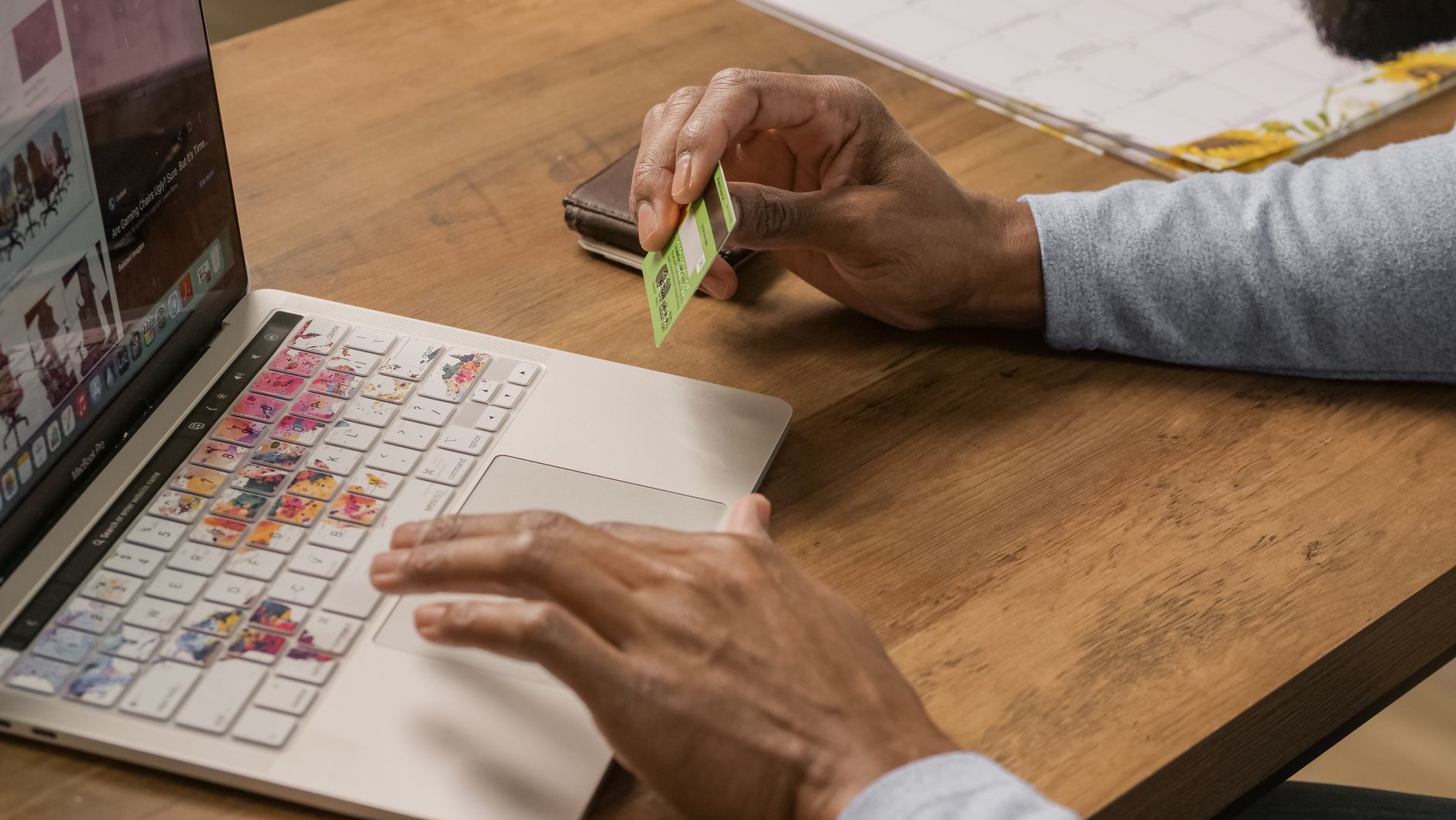
Before you spend a penny attracting new visitors, look at what is happening to the ones you already have. The average online shopping cart abandonment rate sits at 70.22 percent across fifty separate studies, according to the Baymard Institute. Read that again. Roughly seven in ten shoppers who put something in a basket leave the site without buying it. That is not seven in ten people who were never interested. Most of them wanted the product enough to add it, then something got in the way, an unexpected delivery cost, a login demand, a checkout that took too many steps, a payment method they do not use.
This is why cart abandonment is the fastest win available to a small online shop. You already paid to get that visitor there, through an advert, a search result, a social post or a recommendation. The sale is sitting half finished. Recovering even a modest share of it costs nothing extra in acquisition spend, because the customer already arrived. Before you write another advert, walk your own checkout as a stranger would. Time it. Count the steps. Note every point where you ask for something you do not strictly need yet.
How to Reduce Friction at Checkout
Friction is anything that makes a shopper stop and think twice before finishing a purchase, and it hides in small places. A forced account creation before checkout. Delivery costs that only appear on the final screen. A form that asks for a phone number before it asks for a card. Each one is a tiny excuse to close the tab, and a shopper who has already found seventy reasons across the industry to abandon a basket does not need many more from you.
The fix is rarely a redesign. It is usually a handful of specific removals: let people check out as a guest, show delivery cost and timing early rather than as a surprise at the end, cut the number of form fields to the minimum, and offer at least one payment method beyond a card, since a shopper who does not have the one you demand will simply leave. This is the discipline our guide to conversion rate optimisation covers in full, and it is worth treating as a standing habit rather than a one-off project, because new friction creeps back in every time you add a plugin, a new supplier or a new delivery partner.
How to Build Mental Availability So You Are the First Name Shoppers Think Of
Checkout fixes recover sales you were already close to winning. The bigger opportunity, and the one most small online shops never get to, is making sure more shoppers think of you at all. Byron Sharp's research into how brands grow found that the businesses that win are not the ones with the deepest loyalty schemes, they are the ones that are easiest to think of and easiest to buy from, across the widest range of moments when a customer has a need. Marketers call this mental availability, and it is built through consistent exposure and a recognisable presence, not a clever one-off campaign.
For a small online shop this is entirely practical. It means the same name, the same colours, the same tone, on every listing, every post and every email, so a shopper who saw you last month recognises you again this month without having to work it out. It means showing up regularly in the places your buyers already look, rather than vanishing for six weeks and reappearing with a big push. British consumers now spend around £2,600 a year online, close to £50 a week, according to Forbes Advisor UK, spread across dozens of small decisions rather than one big one. You are not fighting for a single moment of attention. You are fighting to be the name that comes to mind across many of them.
Why New Customer Acquisition Matters More Than Loyalty Schemes
Small online shops often assume the way to grow sales is to squeeze more out of existing customers, another loyalty tier, another points scheme, another discount for returning buyers. The evidence on how brands grow points the other way. Growth comes overwhelmingly from bringing in new customers rather than deepening the loyalty of existing ones, and heavy promotional activity mostly trains customers to wait for the next discount rather than buying at full price. That does not mean loyalty schemes are worthless. It means they should not be the main lever you pull when sales are flat.
Practically, this shifts where your effort goes. Instead of a fourth email discount to the same list of past buyers, put the energy into reaching people who have never bought from you at all, through search, through social, through partnerships with adjacent small businesses who already have the audience you want. The global e-commerce market is on track to reach around $6.8 trillion by the end of 2026, according to Forbes Advisor UK, and almost none of that growth is existing customers spending more with the same shop. It is new buyers entering the market and choosing where to spend for the first time. A small online shop that only talks to people who already know it is competing for a shrinking slice of a market that is mostly made up of people it has not met yet.

How to Split Your Budget Between Brand Building and Promotions
If new customers matter this much, the natural next question is how you spend to reach them. Long-running effectiveness research from the IPA, drawing on more than a thousand campaigns, found that businesses which balance brand building with short-term sales activity outperform those that rely entirely on either one. The rough long-run split the data supports is around 60 percent of effort on building recognition and trust over time, and 40 percent on activity designed to convert a sale this week or this month. Pure discounting drives a quick spike that fades fast and damages what people are willing to pay you next time. Pure brand building without any conversion push misses the shopper who is ready to buy right now.
For a business running its own marketing with a limited budget, this is less about a precise percentage and more about a habit. Do not spend every pound on the next flash sale. Keep some of it on the steady, unglamorous work of being seen consistently, a weekly product post, an honest email that is not always selling, a customer story shared because it is genuinely good, not because a discount code needs pushing. That steady presence is what makes your occasional sale or promotion land on an audience that already half trusts you, rather than on strangers seeing your name for the first time in a discount code.

How to Match Your Messaging to What Shoppers Already Know
One reason online sales pages underperform is that they speak to the wrong stage of the shopper's thinking. Some shoppers landing on your site have never considered a product like yours before, and need to be shown the problem exists before they will care about your solution. Others already know exactly what they want and are comparing you against two other tabs open in their browser. A page written for the second group, all specification and price comparison, will bore or confuse the first group, and a page written for the first group, all gentle education, will frustrate the second group who want the answer.
Look at where most of your traffic sits. If people are arriving through broad, curious searches, your product pages need to do more explaining before they sell. If people are arriving through comparison searches or from an advert that already named your product, they need speed, clarity and reassurance rather than education. Getting this match right is one of the highest-leverage, lowest-cost changes available, because it costs nothing to rewrite a page, only the willingness to look at your own site the way a stranger at each stage would.

Where UK Online Sales Are Growing Right Now
It helps to know the shape of the market you are selling into. Internet sales accounted for 27.6 percent of total retail sales in Great Britain in May 2026, a slight rise from 27.3 percent the month before, according to Statista. Growth is not spectacular month to month, but it is steady and it is not reversing. The Office for National Statistics recorded non-store retailers, predominantly online sellers, growing sales volumes by 1.2 percent over the month to May 2026, following growth in both March and May, and total UK retail sales volumes rose 0.4 percent in the three months to May 2026 compared with the three months to February, with department stores up 2.7 percent over the same period.
Looking further out, an estimated 22.5 percent of all retail sales are forecast to be online by 2028, according to Forbes Advisor UK. That is a market that keeps expanding rather than one that has already peaked, which is worth remembering when a quiet month tempts you to assume online selling has stalled. A slow month for your shop is not necessarily a slow market. It is more often a sign that one of the levers above, checkout friction, recognition, budget balance or messaging match, needs adjusting.

How to Measure and Keep Improving
None of the above is a one-off project. Set a small number of numbers you check regularly rather than obsessing over every metric available. Your checkout completion rate tells you whether friction is improving. New customer numbers, tracked separately from repeat purchases, tell you whether acquisition is working rather than simply recycling the same buyers. And a rough sense of where your traffic is coming from tells you whether your messaging matches the stage those visitors are at.
Review these monthly, not daily. Online sales move in noisy short bursts, and chasing every dip or spike leads to constant, directionless changes that never let any single fix prove itself. Give a change at least a month before judging it, then keep the ones that work and drop the ones that do not. For the wider set of levers that sit around online sales, from traffic sources to email and social, our guide to ecommerce marketing covers the full picture this article's checkout and demand fixes sit inside.