How Do Nail Technicians Get More Clients?
New clients come from three overlapping sources, being found nearby when someone searches, being shown convincingly through your own past work, and being recommended by someone who already trusts you. Miss any one of the three and the other two have to work harder. A technician with beautiful nail art but no reviews looks unproven. A technician with plenty of reviews but a patchy Google listing never gets found in the first place. A technician who nails both but never asks a happy client to tell a friend leaves the cheapest source of new business untouched.
The UK nail sector is not shrinking, which is worth knowing before anyone assumes there are too many technicians chasing too few clients. Industry analysis puts UK nail salon revenue on track to reach US$1,198.7 million by 2030, growing at 6.7 percent a year from 2024, with manicures alone holding a 31.3 percent share of that spend in 2023, according to Grand View Research. That is a genuinely growing category, which means the job is not fighting over a shrinking pie. It is being the name that comes to mind first when someone in your area decides to spend part of that growing budget.
Why Local Search Is Where Most New Nail Clients Start
Most people do not decide to get their nails done and then go looking for a specific technician by name. They decide they need their nails done, and only then start searching, which is exactly the kind of moment marketing science calls a category entry point, a real situation in life that triggers a category thought, in this case "who does my nails". The more of these entry points your business is linked to in a searcher's mind, the more often you get remembered at the moment that matters, as the Ehrenberg-Bass Institute's work on category entry points sets out. For a nail technician those entry points are specific and repeatable: a wedding in six weeks, a holiday booked, payday, a birthday, a school photo day. Your Google Business Profile, your name, your opening hours and your location are how you get pulled into that search.
The unglamorous first step is a complete, accurate Google Business Profile, the correct address or service area, current opening hours, your actual services listed by name (gel, biab, acrylic, nail art, not "manicures"), and photos uploaded weekly rather than once and forgotten. A technician in Leeds who works from home should set her service area precisely rather than leaving it vague, because a vague listing gets shown to fewer of the exact searches that matter. This single piece of housekeeping, kept current, does more for new client volume than most paid advertising a solo technician could afford.
How to Turn Instagram and TikTok Into a Booking Engine
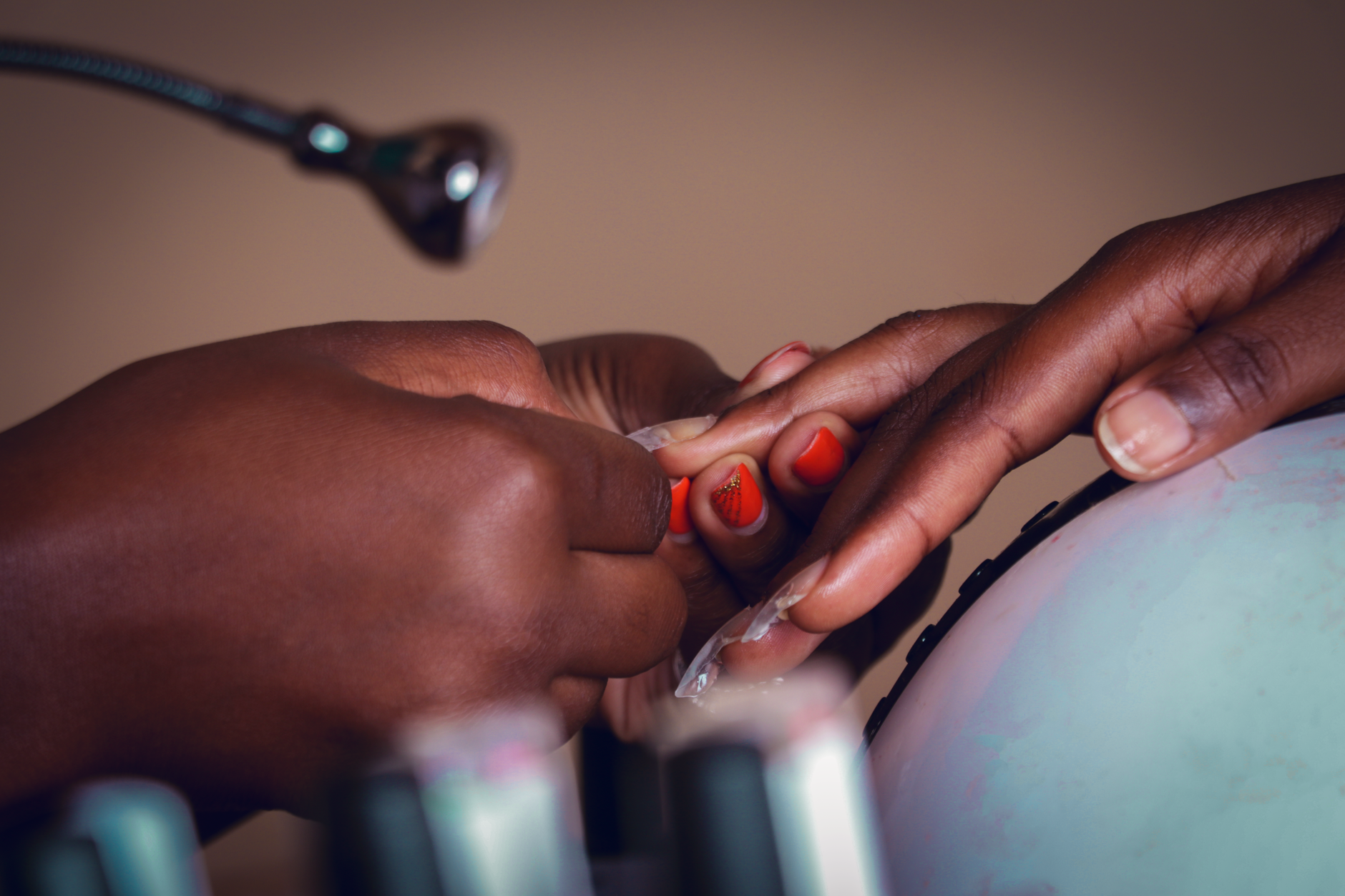
Nail work has an advantage almost no other small service business has. The product is worn in public, on someone's hands, for weeks after the appointment. Every set of nails you do is a small advert walking around your town, which is precisely the kind of visible, shareable outcome that drives word of mouth, the client shows her friend, her friend asks who did it, and the business gets a mention with zero spend. Building your content around that reality, rather than around generic salon selfies, is what turns a following into a booking calendar.
The practical version of this is simple and repeatable. Post the before-and-after of every set, in good light, against a plain background, every single time, so your feed becomes a visual portfolio a new client can scroll through and picture on her own hands. Link content to real triggers in the calendar rather than posting at random, prom season, wedding season, Christmas parties, exam results day, because a post that lands the week someone is thinking about the occasion does far more work than the same post a month later. Keep your style visibly consistent, the same lighting, the same close-up angle, the same watermark or sign-off, because a recognisable, repeated look is what makes people scroll past ten other salons and stop on yours. That consistency is what marketing science calls mental availability, the ease with which a business comes to mind in a buying situation, built through repeated, recognisable exposure rather than through one clever post, as the research on mental availability describes it. A nail technician who posts the same reliable format every week for a year is doing exactly that work, one photo at a time.
Why Reviews and Referrals Matter More Than Advertising
A nail appointment is intimate and a little bit risky for the client, someone else's hands on hers for an hour, a result she will wear on every video call for the next fortnight. That risk is why proof from other real people carries more weight here than almost any advert could. A five-star review that says "gentle, didn't rush, my nails have never lasted this long" answers the exact worry a new client has before she even books.
Ask for a review the same day, while the client is still looking at her finished nails and feeling good about them, rather than weeks later when the moment has passed. Reply to every review, good and middling, because a considered reply shows a future reader that a real person runs this business and takes it seriously. Referrals work the same logic but travel further, because a friend's recommendation carries none of the scepticism an advert does. A small, honest referral offer, a discount for both the client and the friend she brings, costs little and rewards the exact behaviour that grows a book of clients organically. Nail and beauty businesses skew heavily towards self-employment and small independent operators rather than large chains, which the National Hair and Beauty Federation has tracked across the wider sector, and that structure is precisely why reputation, built one honest review and one genuine referral at a time, does more heavy lifting for a small nail business than it would for a business with a marketing department behind it.
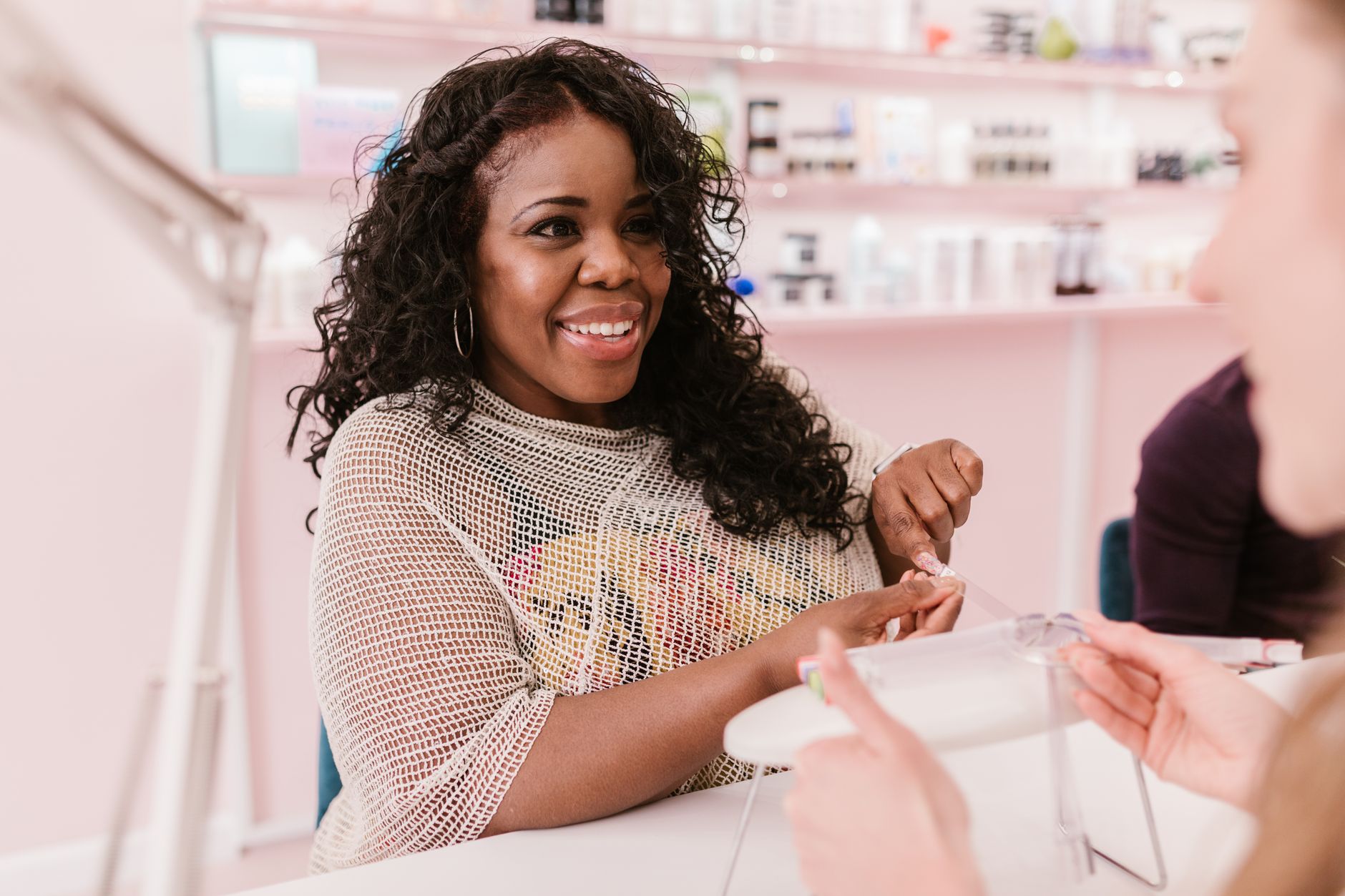
How to Build Repeat Bookings So Your Chair Never Sits Empty
Winning a new client costs far more time and effort than keeping one you already have, so the highest-value marketing a nail technician can do often has nothing to do with attracting anyone new at all. Gel and biab grow out on a predictable schedule, roughly every three weeks, which means you already know almost exactly when a client will need you again before she has thought about it herself.
Use that. A simple text or WhatsApp message sent a day or two before her nails are due to need attention, phrased as a helpful nudge rather than a hard sell, fills the gap in your book before it opens. Take payment details or a small booking fee at the end of one appointment to lock in the next, which turns a maybe into a diary entry. Build a short list of your regulars and message them directly when you have a spare slot from a cancellation, since a familiar face filling a gap is far easier to win back than chasing a stranger. None of this needs software or a big system. A notes app and a simple weekly habit of checking who is due back covers most of it, and it is the single change that turns an unpredictable income into a steady one. For more on the mechanics of filling a diary consistently, our guide to getting more bookings covers the same discipline across service businesses more broadly.

What to Charge and How to Talk About Price Without Discounting
Discounting is the instinct almost every new nail technician reaches for when the book looks quiet, and it is usually the wrong move. A discount trains a client to wait for the next one rather than book at full price, and it teaches every new client who finds you that your price is negotiable before she has even sat down. The nail and wider beauty sector represents a meaningful chunk of UK consumer spend, and people routinely pay a premium for a technician they trust with their hands over one who is simply cheapest, a pattern the British Beauty Council has documented in its work on the economic weight of the sector. Price is rarely the deciding factor once trust exists, which means the fix for a quiet week is rarely a discount and is far more often a fresh set of before-and-after photos and a reminder to your regulars that you have space.
Where a promotion genuinely helps is at the edges, a first-time client offer to get someone through the door once, or a quiet-Tuesday slot priced slightly lower to smooth your week rather than a blanket discount that trains everyone to expect one. Hold your standard price with confidence, explain briefly what is included, gel that lasts three weeks without chipping, a patch test offered as standard, a clean and considered service, and let the work and the reviews do the persuading rather than the price tag.
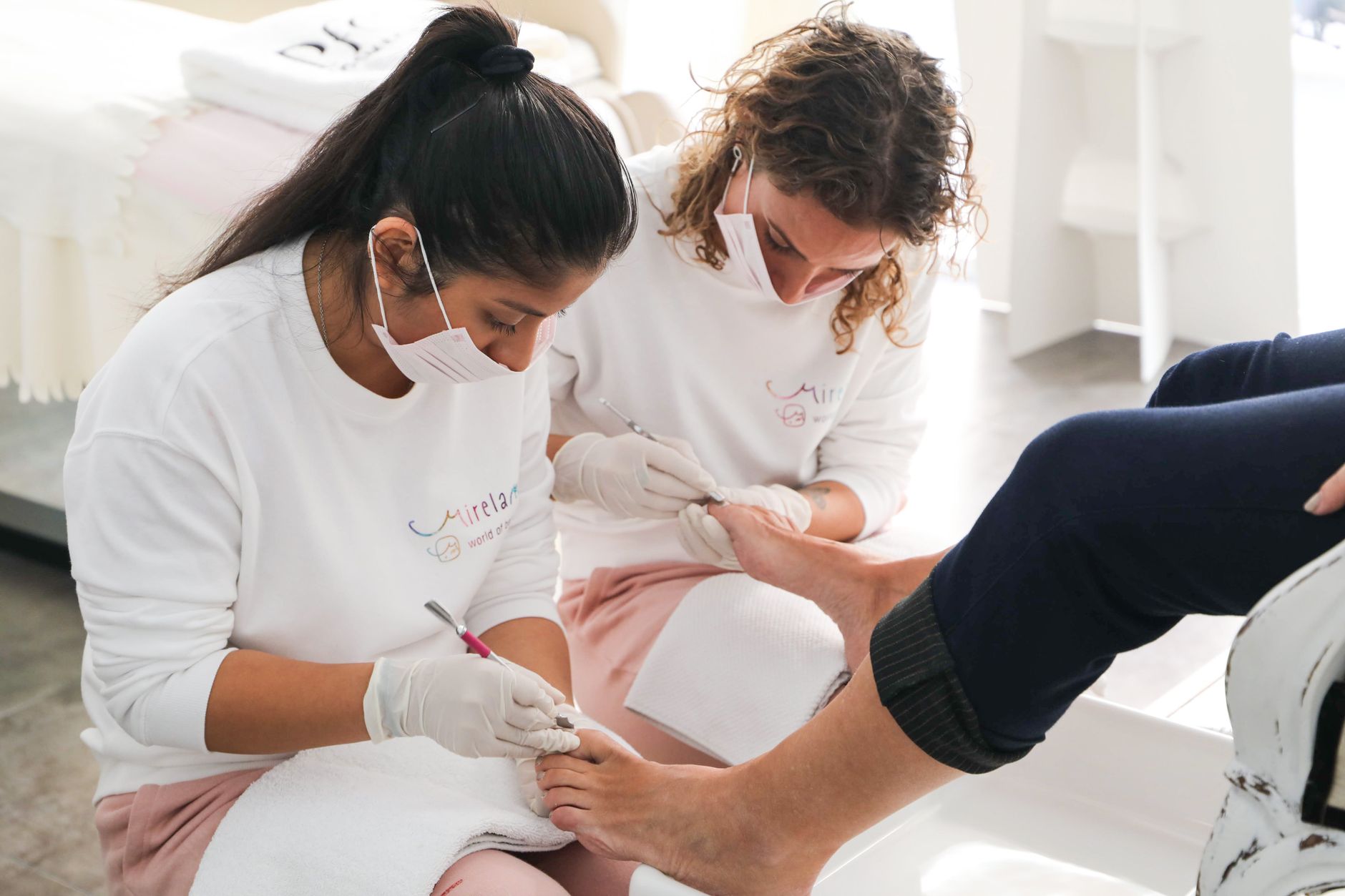
A Simple Weekly Marketing Routine for a Nail Technician
Marketing a nail business does not need to be a second job. It needs to be a short, repeated routine that fits around a diary already full of clients. A workable version looks like this across a week: photograph every set you do, in the same light, against the same background, so building the portfolio costs no extra time. Post two or three of the best from the week, timed against whatever is coming up in the calendar, a bank holiday, a school event, party season. Send a rebooking message to anyone whose regrowth is due within the next few days. Ask every client whose nails you finish today for a review before she leaves the chair. Check your Google Business Profile once a week to make sure hours, services and photos are current. None of it takes more than twenty minutes a day, and held consistently over months it is what builds the recognition that fills a book without a single pound spent on adverts.

Common Marketing Mistakes Nail Technicians Make
A handful of habits undo good work. The first is posting inconsistently, a flurry of photos one week and silence for a month, which stops the recognition-building effect that regular, repeated exposure creates. The second is only chasing this week's client and never messaging past ones, which throws away the easiest bookings a technician has, the ones already sitting in her regrowth schedule. The third is treating every new client the same rather than defining who she serves best, a bridal specialist, a busy commuter who wants a fast fortnightly gel, a nail art enthusiast who wants something nobody else in town offers, because trying to be everything to everyone tends to mean nothing memorable to anyone. The fourth is dropping prices the moment the book looks thin instead of fixing the actual gap, which is usually visibility or a missed rebooking message rather than the price itself. Fix these four and most of the rest of the marketing takes care of itself.