

Start With Your True Costs, Not Your Gut
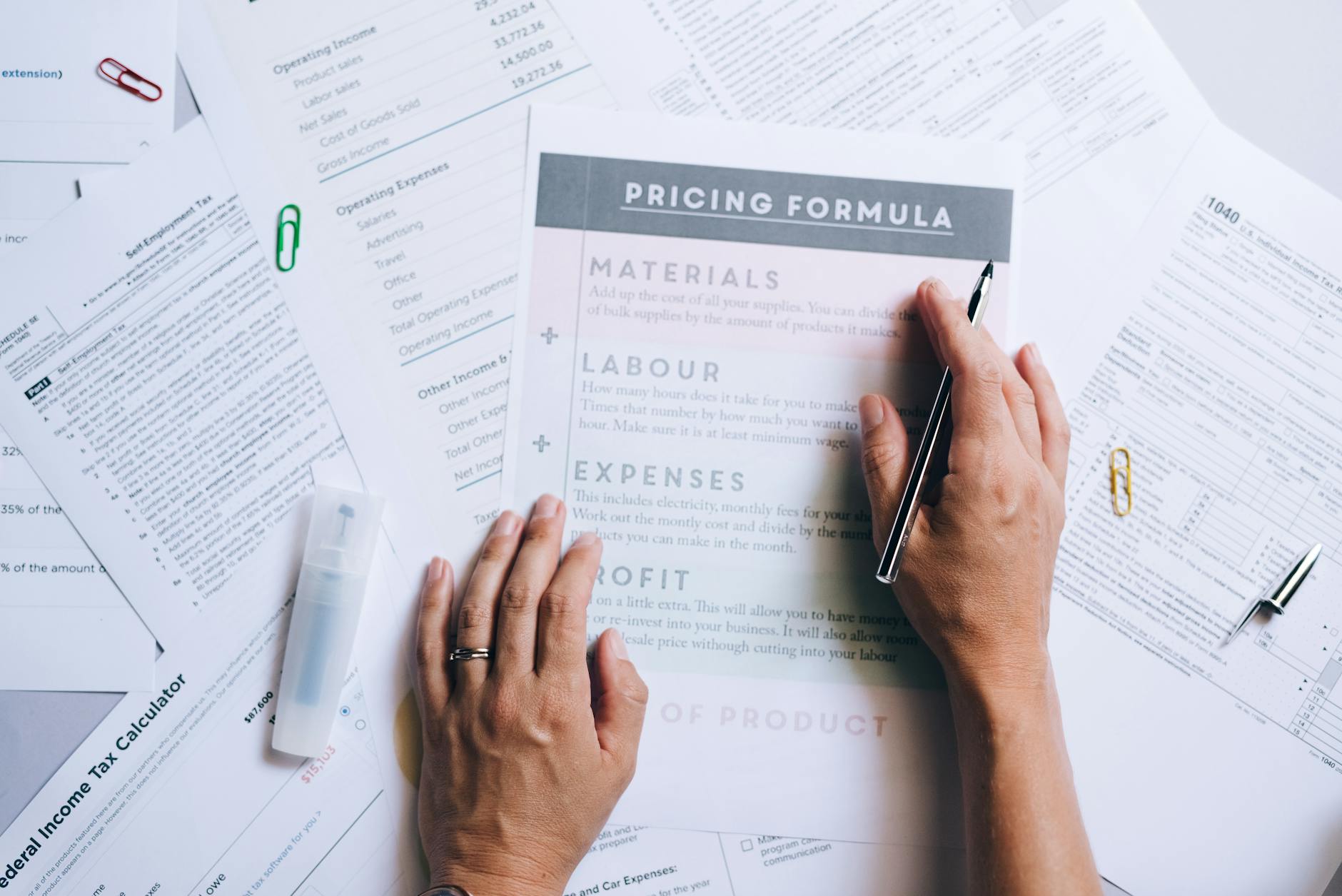
The first mistake is pricing off a number that feels about right. A figure that feels comfortable usually covers the obvious costs and forgets the rest, which is how a service business ends up busy and broke at the same time. Before you decide what to charge, you need a clear floor: the price below which a job costs you money to deliver. Anything above the floor is a business decision. Anything below it is a slow leak.
Your true cost has three layers, and most owners only count the first. The direct cost is the time and materials a job consumes, the hours you spend plus anything you buy in. The overhead is everything that keeps you trading whether or not you have work that week: software, insurance, your phone, your website, travel, the unpaid hours you spend quoting and chasing invoices. The third layer is the one people skip entirely, which is the cost of non-billable time. You do not sell every hour you work. Admin, marketing, and the gaps between jobs all have to be paid for by the hours you do sell.
Here is the floor for an illustrative one-person consultancy, shown as a worked example rather than a cited statistic. Say you want to take home 60,000 a year. Your overhead runs to 12,000. You realistically bill 25 hours a week, because the rest goes on running the business, and you work 46 weeks once holiday and quiet spells are counted. That is 1,150 billable hours a year. To cover 72,000 of take-home plus overhead, your floor is roughly 63 an hour. If you have been charging 45 because it sounded reasonable, every hour you sell has been costing you money you will never see.
| Item | Annual figure |
|---|---|
| Target take-home | 60,000 |
| Overhead | 12,000 |
| Total to cover | 72,000 |
| Billable hours (25/week x 46 weeks) | 1,150 |
| Cost floor per hour | ~63 |
Run this once for your own business. The floor is not your price, it is the line you never quote below. Knowing it changes how every later decision feels, because you stop negotiating against yourself and start negotiating from a number you trust.
Price on Value, Not the Hours You Spend
Once you know your floor, stop pricing up from it by the hour. Hourly pricing punishes you for being good at your job. The faster and more experienced you get, the less you earn for the same result, because the clock runs for fewer hours even though the outcome is worth more. The client does not buy your hours. They buy the outcome those hours produce: the leak fixed, the brand that finally looks the part, the tax bill cut, the website that brings in enquiries.
Value-based pricing means setting the price against what the result is worth to the client, not what it costs you to make. Harvard Business Review describes it plainly: value-based pricing sets prices according to the customer's perceived value of the product or service rather than the seller's cost, and the gap between the two is where your profit lives. You can read the HBR guide to value-based pricing here for the underlying logic.
In practice, value is easiest to anchor when you can point at the result in the client's own terms. A bookkeeper who saves a builder ten hours a month of paperwork is selling those ten hours back, not a spreadsheet. A web designer who lifts a quote-stage form from a trickle to a steady flow of enquiries is selling pipeline, not pages. When you frame the price against the result, a higher number stops sounding expensive and starts sounding obvious, because the client is comparing your fee to what the outcome earns or saves them rather than to an hourly rate they can look up elsewhere.
This is where clear positioning earns its keep. When a prospect can tell in seconds that you are built for someone exactly like them, they stop shopping on price and start judging on fit. A vague generalist competes on rate. A business that is obviously right for a specific customer competes on value, and value pays better. If your services need sharper positioning before the pricing can hold, marketing for services goes deeper on making the right buyer feel you were built for them, and marketing for consultants covers the same ground for advisory and expertise-led work where the value is harder to put on a label.
Build Packages and Tiers So People Choose Up
A single price gives the client one decision: yes or no. Three packages give them a better decision: which one. That shift, from whether to buy to how much to buy, is one of the most reliable ways to lift the average value of a sale without chasing a single new lead.
Tiers work because of how people judge a price. Faced with one option, a buyer compares your number to nothing and worries it is too high. Faced with three, they compare your options to each other, and the comparison does the persuading. A deliberately premium top tier raises the reference point for the whole range, so the middle option, the one you most want to sell, lands as the sensible choice rather than the expensive one. This anchoring effect is well documented, and you can put it to work without any gimmickry: the high tier exists to make the middle tier feel proportionate, and a few clients will surprise you by taking it.
Build three tiers like this. The entry tier solves the core problem cleanly, priced above your floor, aimed at the cost-conscious buyer who needs to start somewhere. The middle tier is your hero, the one you design the whole menu around, bundling the core result with the add-ons most clients end up wanting anyway, priced to be obvious value. The top tier is the premium, with the speed, depth, or hand-holding that a certain kind of client will gladly pay for. Name each tier for the outcome it delivers rather than the features it lists, so the client buys a result rather than a checklist.
| Tier | What it delivers | Illustrative price |
|---|---|---|
| Essential | Core result, done well | 800 |
| Professional (hero) | Core result plus the common add-ons | 1,500 |
| Premium | Everything, with priority and depth | 2,800 |
Most clients land on the middle, exactly as intended, and your average sale climbs without a single price feeling pushy. The point is not to trick anyone. It is to give people a real choice and let the structure carry the price, so the conversation moves from haggling to choosing.
Quote With Confidence, Anchor High
How you present the price matters as much as the number itself. Lead with the result, then the price, never the other way around. When you open with what the client gets and what it is worth to them, the figure that follows is judged against that value. Open with the figure and you invite a flinch before they have heard the reason it is fair.
Anchor with your highest relevant option first. If you mention the premium tier before the entry one, every number after it sounds reasonable by comparison. Stop talking once you have given the price. The silence after a quote feels long to you and normal to the client, and filling it with a nervous discount is how good prices get given away. Quote the number, let it land, and let them respond.
Treat discounting as a deliberate decision, not a reflex. A discount given to win a hesitant client trains that client to expect the lower price forever and signals that your first number was never real. If you want to flex, flex on scope rather than rate: remove something from the package so the lower price buys less, which protects the value of your work and keeps your pricing credible. A confident quote is part of your positioning. A business that believes its price is fair reads as a business that is good at what it does, which is part of why the businesses that win the work they want rarely compete on being the cheapest. Our guide on how to get clients covers the demand side that sits alongside confident pricing.

Raise Your Prices on a Schedule
The hardest price to change is the one you set years ago and never revisited. Costs rise every year, your skill grows every year, and a price that sat still through both is shrinking in real terms. Most owners only raise prices when a crisis forces it, which makes the increase feel sudden and fraught. The fix is to make price reviews routine, so a rise is expected rather than dramatic.
Set a date once a year to review your rates against your costs, your results, and the value you now deliver. New clients get the new price from that date, with no conversation required, because they have no old price to compare against. Existing clients get notice and a clear reason, framed around the value they keep receiving rather than your rising costs, which is your problem and not their motivation to stay. A modest annual rise, taken calmly, compounds into a healthy business. A long freeze followed by a panicked jump strains every relationship you have.
Expect to lose a few of the most price-sensitive clients, and treat that as the system working rather than failing. The clients who leave over a small, fair increase are usually the ones who cost you the most to serve and value you the least. The room they free up tends to fill with better-fit work at the higher rate. Pricing is not a thing you set once. It is a dial you adjust on a rhythm, in step with the value you deliver.

The Method in One Page
The whole approach fits on a single sheet. Find your true cost floor, the line you never quote below. Price on the value of the result, not the hours you spend, so getting better at your job pays you more rather than less. Offer three tiers so clients choose how much rather than whether, and let the premium option anchor the middle one you most want to sell. Quote the price with the result first and hold your nerve through the silence. Then review your rates on a schedule, so they keep pace with your costs and your craft instead of falling behind. Run the worked example on your own numbers before you change a single quote. A price built this way is one you can say out loud without apologising, which is the real test of whether you have priced your services right.