
The Knowledge Gap Has Always Been the Real Barrier
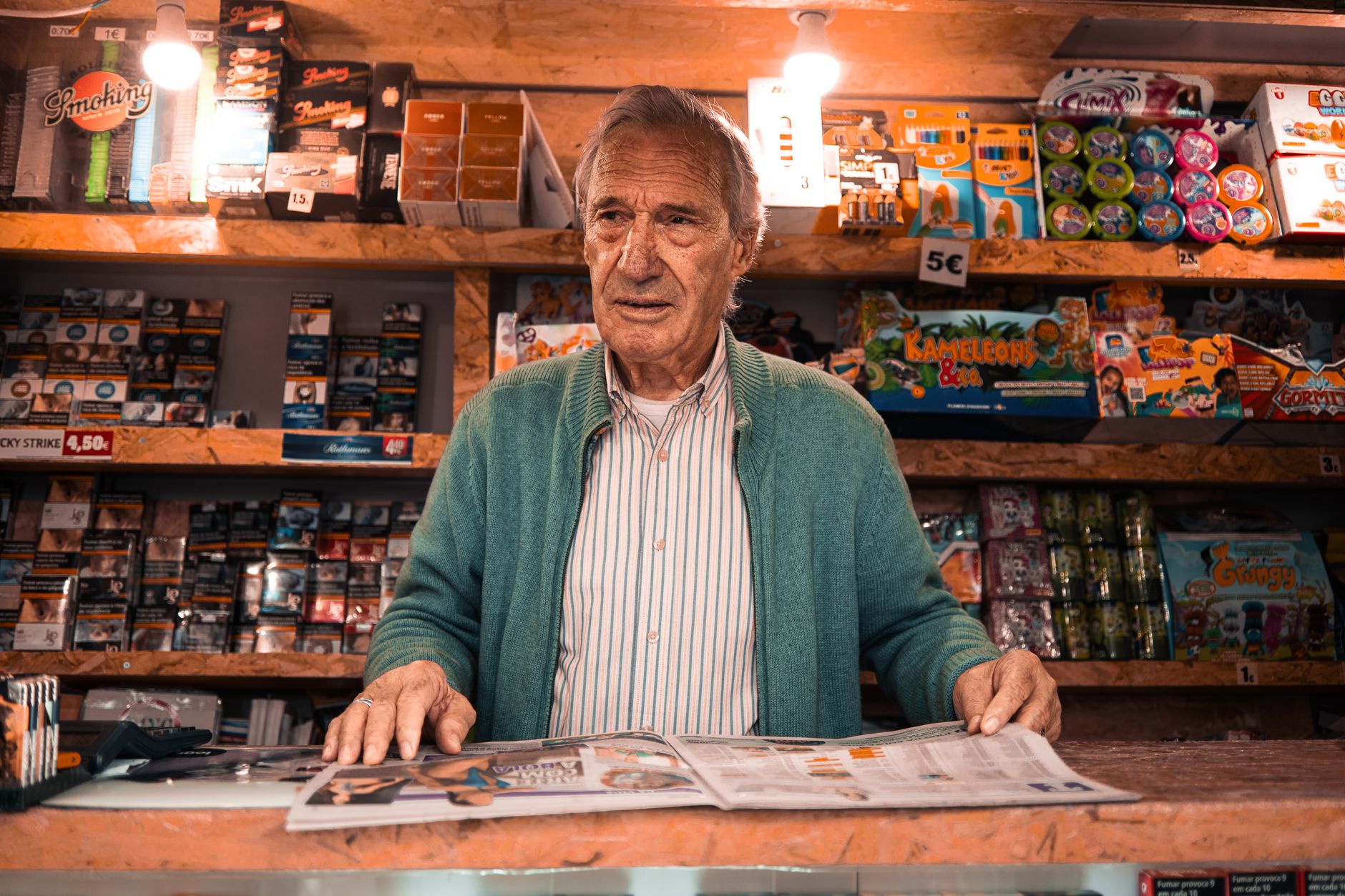
Start with the scale of who we are talking about. At the start of 2025 there were around 5.5 million private sector businesses in the United Kingdom, and the GOV.UK business population estimates show that the overwhelming majority are small, with a large share having no employees at all. That last detail is the one that matters most. Millions of these businesses are run by one person who is the owner, the operator, the bookkeeper and, on a Tuesday night, the marketer. They are not short of effort. They are short of one specific thing, and it is marketing knowledge. The budget and the tools were never the real barrier.
For decades that knowledge lived in expensive places. It sat inside agencies, inside the heads of strategists, inside marketing degrees and inside the budgets that could pay for all three. A small business owner could buy a logo or a website or a batch of leaflets, but the thinking that makes those things work, the part that decides who to talk to and what to say and why, stayed out of reach. So owners did what anyone would do. They bought tactics instead of understanding. A burst of ads here, a month of posting there, a friend who knew a bit about social media, each tried in isolation and dropped when it did not produce a miracle. The marketing came in fits and starts, and the sales chart stayed flat, and the owner concluded they were simply bad at marketing. They were not bad at it. They had never been given the thing that makes it work.
I saw this from both sides over the years, first inside agencies that sold that knowledge by the hour, and later sitting across the table from owners who could not justify the fee and walked away to guess on their own. Neither side was the villain in that story. The agency had bills to pay and a genuine craft worth paying for. The owner had a business to run and a budget that would not stretch. The system simply left a vast group of capable people on the wrong side of a paywall, and the thing behind that paywall was knowledge that, in truth, is not all that hard to teach. That is the gap I mean when I say marketing has always been about knowledge, and it is the gap that is finally starting to close.
Tactics Without Understanding Is Where the Money Leaks
Here is what that missing knowledge costs, in plain terms. Most owners aim every scrap of their marketing at the people who are ready to buy this week, and treat everyone else as a waste of effort. It feels logical. It is also where the money leaks away, because the people ready to buy this week are a tiny slice of the market. Professor John Dawes of the Ehrenberg-Bass Institute set this out in what is now known as the 95:5 rule, the finding that for many products and services only around 5 percent of potential buyers are in the market at any given moment, which leaves roughly 95 percent who are not ready yet. Advertising, Dawes explains, works mainly by building and refreshing memories of a brand, so that when those people do come into the market, the business is one they already recognise and trust.
An owner who has never been taught this spends their whole budget shouting at the 5 percent and wonders why growth never compounds. An owner who understands it keeps a steady, affordable presence in front of the 95 percent as well, so the recognition is already there when the moment comes. The strongest businesses balance the two, the short-term activity that drives this month's sales and the long-term presence that drives years of growth. None of this is secret. It is decades old and well documented. It has simply been locked behind a door that most small businesses were never handed a key to.

Why Building Recognition Is a Matter of Craft
The frustrating part is that building this kind of recognition is not a matter of outspending anyone. It is a matter of doing a few things consistently and well. Dawes describes mental availability as the strength of a brand's links to the situations in which a customer might need it, and he is clear that it builds slowly, over months and years, through consistent and distinctive presence rather than through one loud campaign. For a small business that is genuinely good news, because consistency and distinctiveness are free. A plumber who shows up helpfully in the local group every week, with the same name and the same tone, is building exactly the asset a national brand pays millions for. The catch has always been knowing that this is the work, and having the judgement to keep doing it when it feels slow. That judgement is the craft. It is learnable, and it has been the thing standing between an ordinary small business and a thriving one.
AI Is Collapsing the Cost of Expertise
This is where the next decade turns. For the first time, the expertise that lived behind that expensive door is becoming something an owner can hold in their own hands. Artificial intelligence, used well, can do the research a strategist used to charge for, draft the work a copywriter used to bill for, and explain the reasoning a consultant used to keep to themselves. The cost of getting expert-level marketing thinking is falling towards zero, and it is falling fastest for exactly the businesses that could never afford it before. The scale of this is easy to underestimate. Stanford's 2026 AI Index found that the value people get from generative AI tools jumped 54 percent in a single year while most of those tools stay free or close to it, and that AI now lifts marketing output by as much as 73 percent in measured studies. The most expensive part of marketing, the expert thinking, is quickly becoming the cheapest. I find that genuinely exciting, and it is the reason I started building in this space. The agency-level thinking that a corner shop could never buy is becoming available to the corner shop. That is a shift in who gets to compete, and it is the most democratising thing to happen to marketing in my career.
I want to be careful here, because there is a lazy version of this argument that says human marketers are finished and the machines will do it all. I do not believe that, and the evidence does not support it. The best marketing still comes from a person who understands their customers. I see the skilled professionals who do this work as the benchmark, and the opportunity is to put that benchmark level of thinking into the owner's hands, so the owner can do their own marketing well and bring in a specialist for the things that genuinely need one. This future lifts the owner up while leaving plenty of room for everyone who is good at the craft.

The Catch: AI Is About to Bury Everyone in Average
There is a hard truth sitting alongside the opportunity, and pretending it is not there would be dishonest. The same tools that let a small business produce good marketing also let everyone produce an ocean of mediocre marketing, instantly and for free. We are about to live through a flood of average content. Every channel will fill with competent, forgettable, machine-made posts that all sound the same, because they were all made the same way by people asking for the obvious thing. When everyone can generate infinite content, content stops being scarce, and scarce is what gives something value.
This flood is not hypothetical. Stanford's 2026 AI Index reports that organisational use of AI has climbed to 88 percent, so the tools that mass-produce this content now sit in almost every business. Search engines have already drawn their line on it. Google's spam policies now name scaled content abuse directly, defining it as producing many pages mainly to manipulate rankings rather than to help people, and they are explicit that this applies no matter how the content is made, by a human or by a machine. The message from the people who control the front door of the internet could not be clearer. Volume is worthless. Quality and genuine usefulness are everything. The flood is coming, and the businesses that ride it by pumping out more average content will sink in their own output.

The Way Through Is Judgement, Taste and Proof
So if average is about to be infinite and free, what becomes valuable? The answer is the part of marketing a machine cannot fake on its own: judgement about what matters for your business, taste in how you say it, and proof that you are worth choosing. This is the moment the small business owner can win, because these are human things, and the owner has more of them than any algorithm. They know their customers by name. They know the question every new client asks. They know the moment a sale is won or lost. That knowledge, combined with the new cheap expertise, is a stronger position than a faceless competitor producing generic content at scale will ever hold.
Proof matters more than ever in a flooded world, because when everything sounds equally polished, people fall back on trust. Edelman's 2026 Trust Barometer, a survey of nearly 34,000 people across 28 countries, describes a world turning inward, with seven in ten now hesitant to trust anyone outside their own circle, and it finds that people extend trust to a business through the voices and names they already know. For a small business that is a gift, because trust is something a real business with real customers can earn and a content farm cannot. Honesty matters more too. Under the UK advertising rules, all marketing must be legal, decent, honest and truthful, and in a sea of overblown machine-made claims, a business that says true things plainly stands out by contrast. The way through the flood is human, built on a person's judgement, a real customer's proof, and an honest voice.

What Good Looks Like in Practice
Let me make this concrete, because the argument only earns its place if an owner can picture it. Think of a family-run kitchen fitter in a market town. Two brothers, no marketing background, a van and a workshop, who for years relied on word of mouth. It brought steady work, and then a frightening quiet spell arrived when a national fitter opened nearby with glossy adverts the brothers could never match. The old reflex would have been to panic and buy a stack of leaflets and a short burst of ads. They did something better, the patient and unglamorous things the evidence rewards. They claimed and completed their Google Business Profile and asked every happy customer for a review on the day the kitchen was finished, building the kind of fresh, real proof that, as Edelman's 2026 Trust Barometer finds, people increasingly lean on when they decide who to believe. They posted one honest before-and-after photo a week in the town's community group, the same name and the same warm tone each time, so that month by month they became the fitters that people in that town simply knew. They wrote their prices and their promises plainly and never overstated them, which kept them comfortably on the right side of the rule that all marketing must be legal, decent, honest and truthful, and, more to the point, kept them trusted. None of it cost much. All of it compounded. Within a year they were the first name that came to mind whenever someone in three surrounding villages thought about a new kitchen, and the national competitor's adverts washed over a town that already had its fitters. That is what winning looks like for a small business, and every single move in it is learnable.

The Businesses That Will Struggle, and the Ones That Will Thrive
It would be dishonest to pretend every small business benefits from this automatically. Two paths open from here, and the fork between them is judgement. One business hears that content is now free to produce and floods its channels with generic posts a machine wrote from a one-line prompt, each one indistinguishable from ten thousand others, and watches them sink without a trace. The other business uses the very same tools to do the thinking and the drafting faster, then adds the things only it can add: a real opinion, a real customer's story, a photograph of actual work, a voice that sounds like a person who cares. The tools in both hands are identical. The outcomes could not be further apart, and the entire gap between them is the human judgement laid on top. This is the same lesson the marketing science has taught for years, that distinctive and consistent brands are the ones that grow. It now decides which small businesses rise above the noise and which vanish into it. There is even a warning in the data for anyone tempted to let the machine do the thinking, because Stanford's 2026 AI Index flags early evidence that heavy reliance on AI can carry a long-term learning penalty, dulling the very skills a person needs to judge whether the output is any good. An owner who reaches for AI as a way to skip the thinking will struggle, and deserves to. An owner who treats it as a collaborator that frees them to do more and better thinking will pull ahead.

Meeting Buyers the Way They Decide
There is one more piece of craft that separates the owner who wins from the one who drowns, and it is understanding how people buy. They do not see one advert and act. They wander through search, reviews, social posts, a friend's recommendation and a half-remembered name, across the long and messy middle of a purchase before they ever decide. A small business that understands this does not try to force a sale in one hit. It makes sure there is something useful and trustworthy to find at each of those moments, so that the buyer keeps arriving back at the same name with a growing sense of recognition. That is the practical shape of mental availability for a business with no budget. Be present, be consistent, be genuinely helpful at the points where people are deciding, and let the recognition compound. The owner who grasps that has the whole game, and it is a game they can now afford to play.

What This Asks of the Owner
None of this happens by buying another tool and hoping. The owner who wins the next decade is the one who decides to understand their own marketing, even a little, because understanding is what turns cheap expertise into good decisions. You do not need a degree. You need to know who you are for, what you want to be known for, the few channels that fit your customers, and the patience to keep at them while the recognition builds. You need to learn enough of the science to tell a good idea from a shiny distraction, and enough of the craft to sound like yourself rather than like everyone else. If you want a place to start on the thinking, what a marketing strategy is lays out the few choices that sit underneath everything else, and how to create a marketing plan turns those choices into a schedule you can act on.
This is the belief that the whole of Starlight Tech is built on. We are building Compass to put agency-level marketing thinking into the hands of the people who run their own businesses, from the research and the strategy to the daily doing, and to teach them the craft as they go, so they get better at it every time they use it. I will tell you the unusual part of our ambition, because it says everything about where I think this is going. We want our customers to need us less over time. The aim is to close the knowledge gap for good, so that one day an owner can find their own way without us, with the judgement and the craft now sitting where they always should have sat, with the person who built the business. Making owners dependent on another piece of software would count as a failure by our own measure.

The Decade Ahead
For twenty-five years the deck was stacked. Marketing knowledge was expensive, concentrated, and out of reach for the millions of businesses that needed it most, and the result was a lot of capable people concluding they were no good at something they had simply never been taught. That era is ending. The cost of expertise is collapsing, the flood of average content is raising the value of judgement and trust, and the human advantages a small business already holds, knowing its customers and standing behind its work, are becoming the rarest and most valuable things in the market. The owner who learns the craft, backs it with the new cheap expertise, and keeps showing up with honesty and consistency, is going to outcompete businesses many times their size. This is a prediction about people more than technology. It is about millions of capable owners finally being handed the keys to a room that stayed locked for a century, and deciding to walk in and learn what is there. The next decade of marketing belongs to them. After a quarter of a century watching it go the other way, I cannot think of a better thing to spend my time building toward.